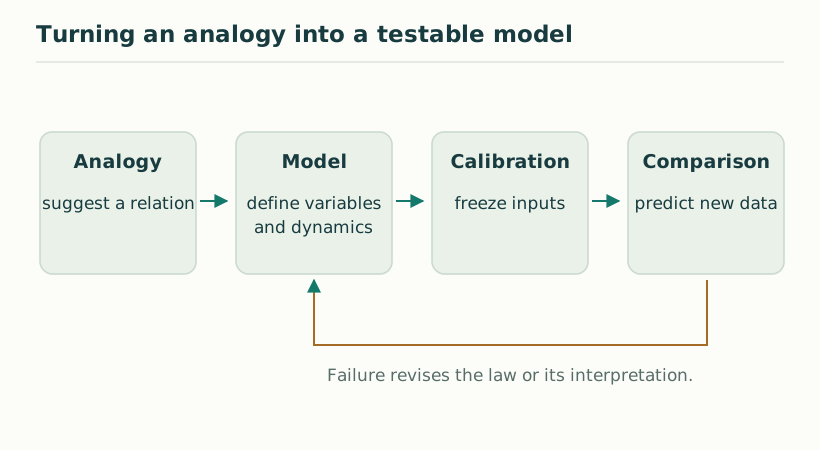
Turning an analogy into a testable model
A research route turns an analogy into defined states, calibrated equations, and a discriminating comparison. Its feedback loop shows where a failed comparison should revise the model.
VISUAL LIBRARY
Move from a diagram to its assumptions, calculation and explanation. Filter the collection by topic or diagram role, open a full-size image, or download its original SVG.
“Exact” identifies a calculation or relationship within its stated assumptions; it does not imply empirical confirmation of every SMM/DTT interpretation. Conceptual diagrams organize ideas, while model illustrations visualize a supplied construction. Read each linked explanation for its precise scope.
All figures remain visible without JavaScript. Original SVG files stay sharp when enlarged. The first 72 figures are retained, and six new research diagrams extend the collection.
No matching figures. Try a broader term or clear the filters.
A research route turns an analogy into defined states, calibrated equations, and a discriminating comparison. Its feedback loop shows where a failed comparison should revise the model.
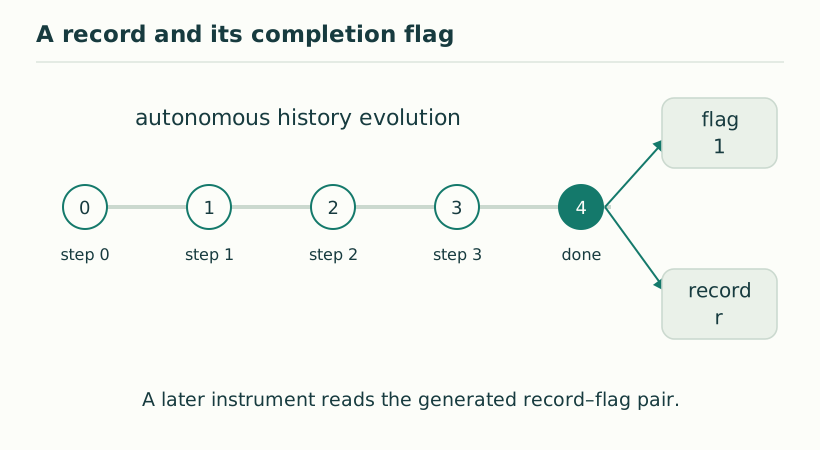
A prescribed autonomous history can deliver a retained result together with a completion flag. Reading the flag checks that model's completion condition; a flag assigned by hand would not explain the dynamics.
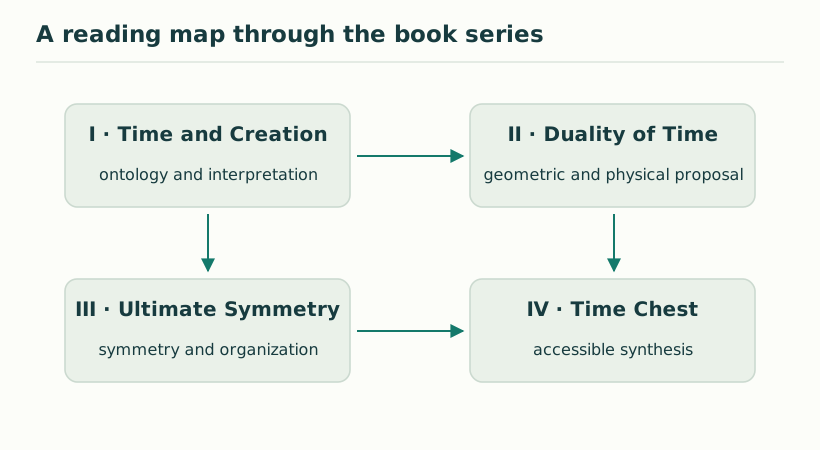
The book themes connect philosophical foundations, dual-time formalism, symmetry, and accessible explanations. The arrangement is a reading route through the programme, with each mathematical bridge developed separately.
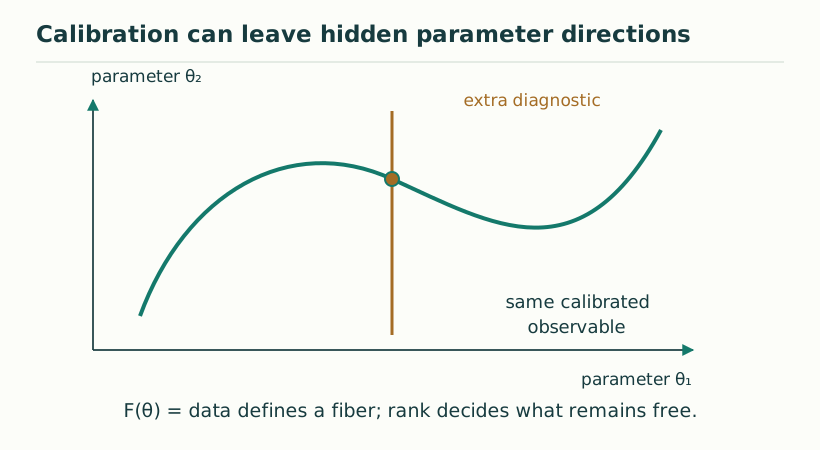
One calibration can leave a curve of equally compatible parameter choices. A second independent diagnostic may resolve that freedom; a prediction based on the first calibration must be constant along the remaining curve.
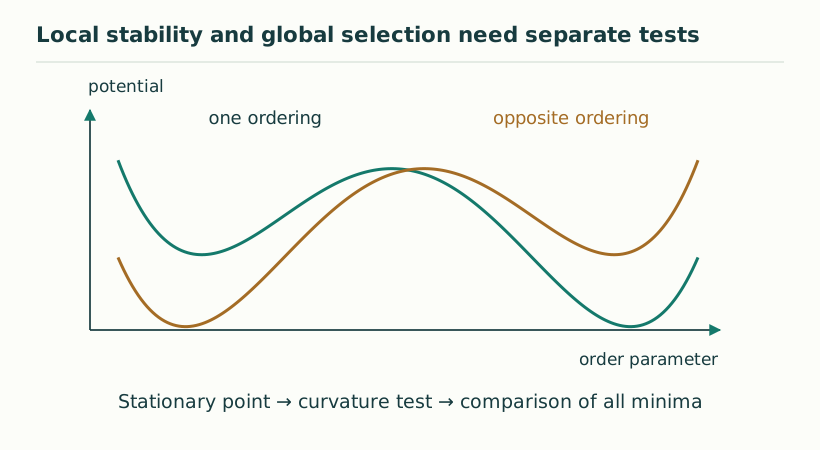
Illustrative two-well potentials distinguish a stable local state from the globally preferred state. Selecting a physical vacuum requires the actual potential and its global comparison, including any deformation terms.
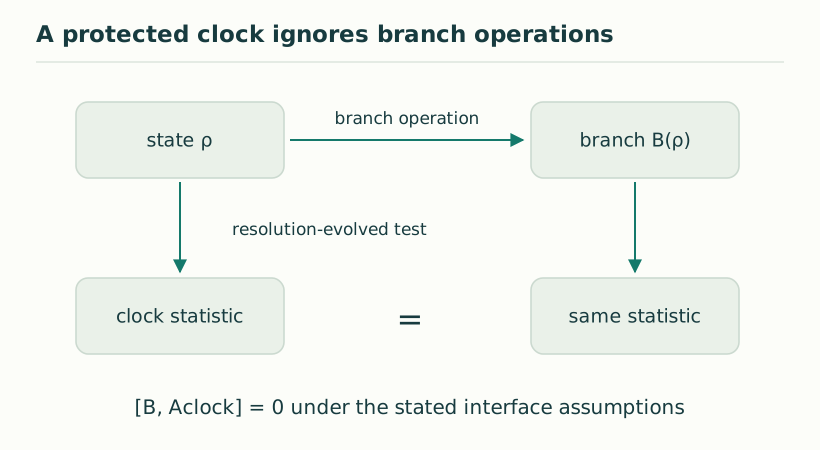
A commuting interface makes an admitted clock statistic insensitive to specified branch operations. Resolution evolution can still change the reading, so the result identifies a protected clock under stated coupling assumptions.
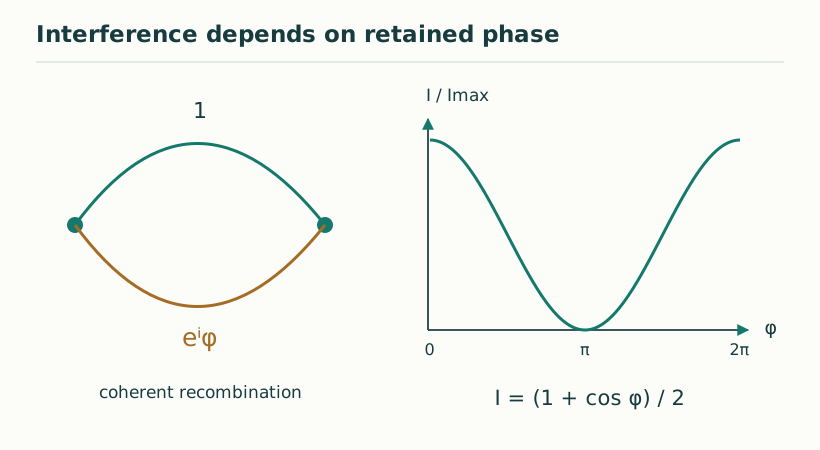
The ideal coherent two-path law is I(φ) = (1 + cos φ)/2, ranging from constructive to destructive interference. A temporal model must identify how the alternative histories retain phase and how their phase difference is controlled.
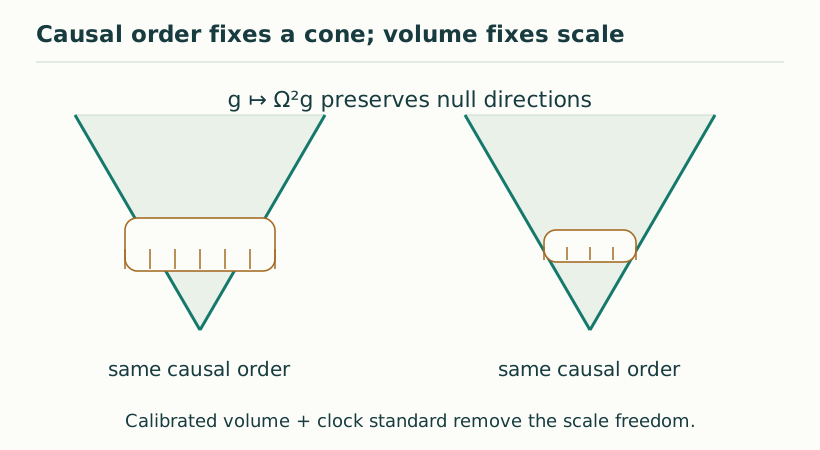
A causal cone fixes conformal relations, while an independent volume or ruler calibration fixes scale. Realizing those relations as physical boosts additionally requires compatible clocks and detectors.
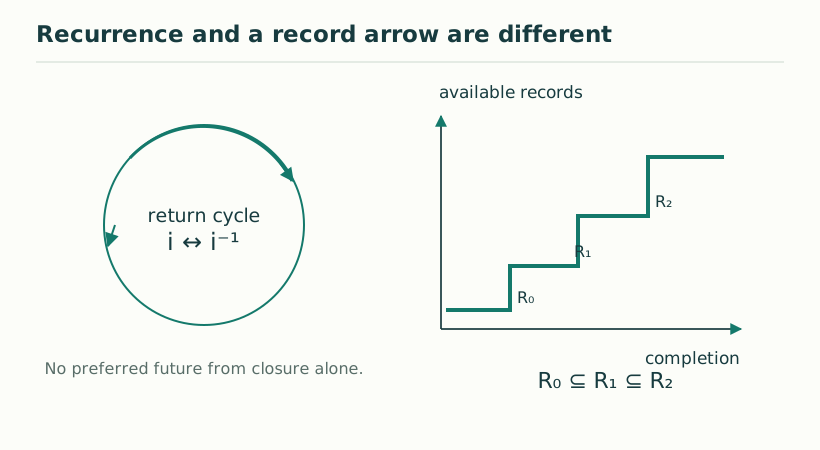
A reversible cycle admits both directions, whereas a growing collection of retained records has an availability order. Their connection requires a rule for record formation and retention.
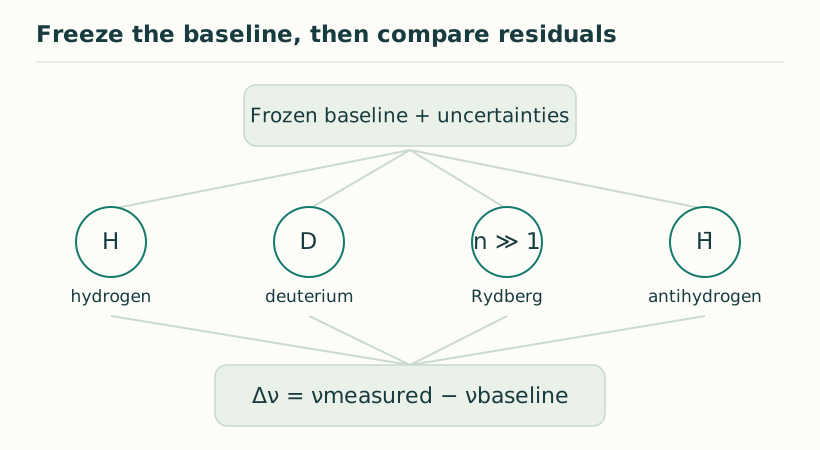
A fixed baseline links hydrogen, isotope, Rydberg, and antihydrogen comparisons before residuals are assessed. The schematic describes a test design; nuisance cancellation depends on a specified covariance model.
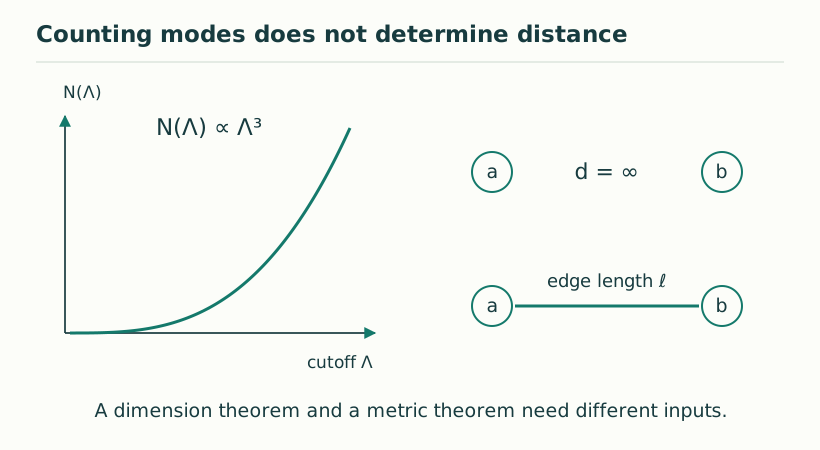
Mode counting and distance answer different reconstruction questions. Finite spectral-growth dimension can coexist with infinite distances when the operator and admitted observables do not control the relevant differences.
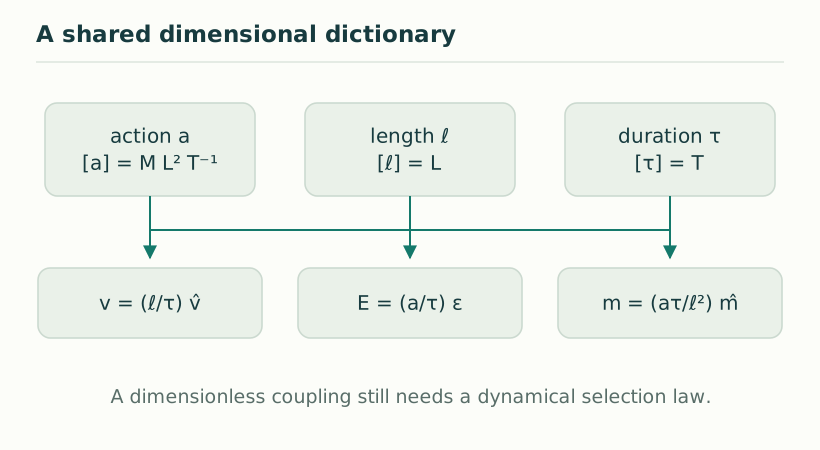
Action, length, and duration standards convert dimensionless model outputs into velocity, energy, and mass scales. These dimensional identities organize physical matching while leaving the numerical standards to be supplied or derived.
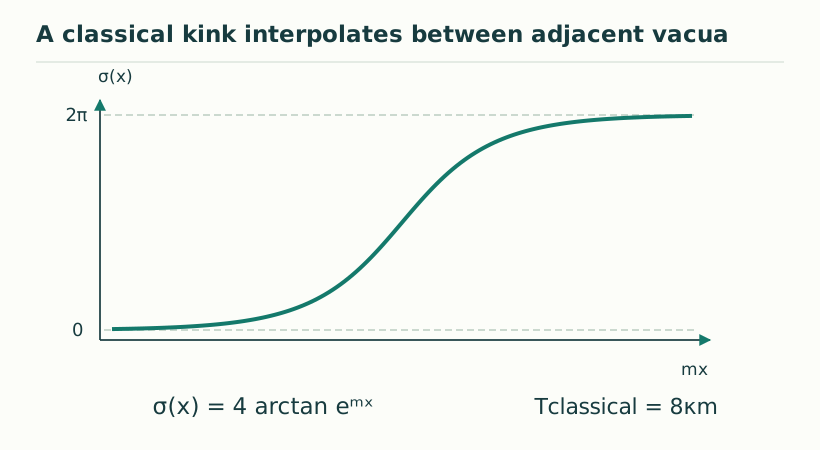
The classical profile σ(x) = 4 arctan exp(mx) connects adjacent vacua of the specified sine-Gordon-type model. Its tension is 8κm under the stated normalization; matching and a quantum mass gap require further analysis.
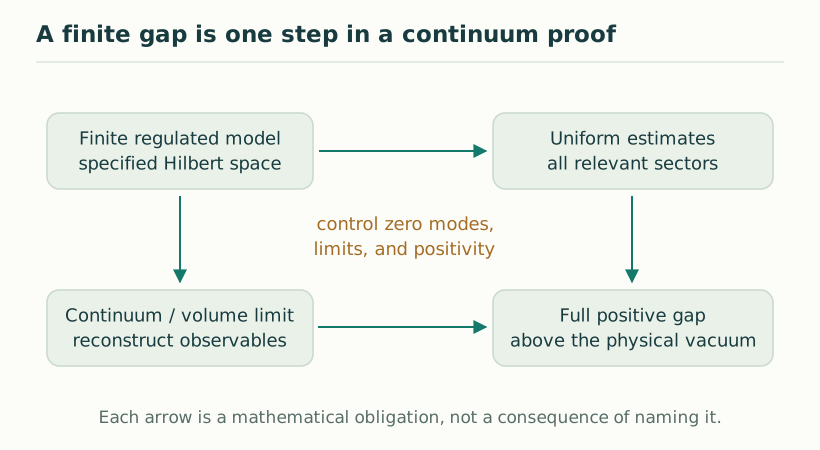
A continuum mass-gap argument must connect regulated spectra, uniform bounds, and reconstruction of the physical sector. The diagram separates these obligations from a finite-volume or selected-sector threshold.
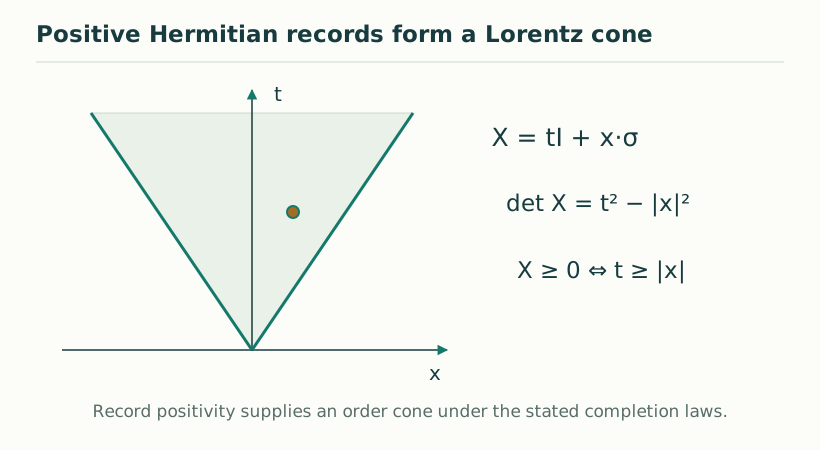
For X = tI + x·σ, det X = t² − ∥x∥² and positivity is equivalent to t ≥ ∥x∥. The drawing is a two-dimensional section of this four-dimensional positive Hermitian cone.
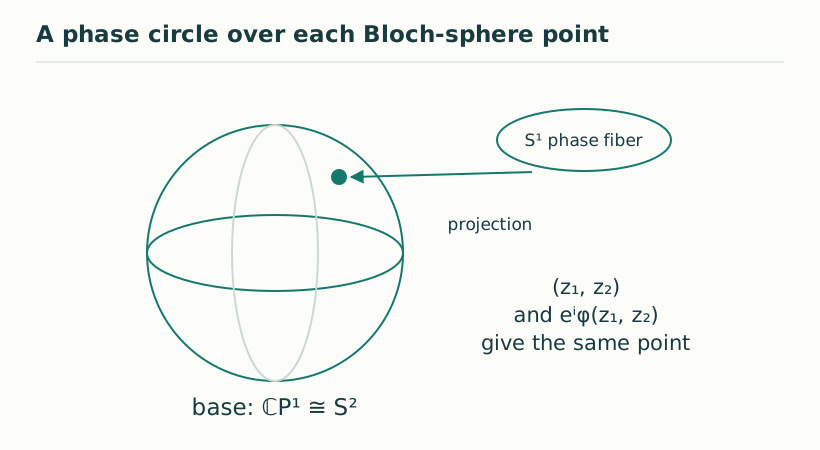
A normalized two-component spinor and its common-phase rotations project to one Bloch-sphere point. The Hopf bundle has total space S³; the sketch represents its fibers without embedding S³ in ordinary three-space.
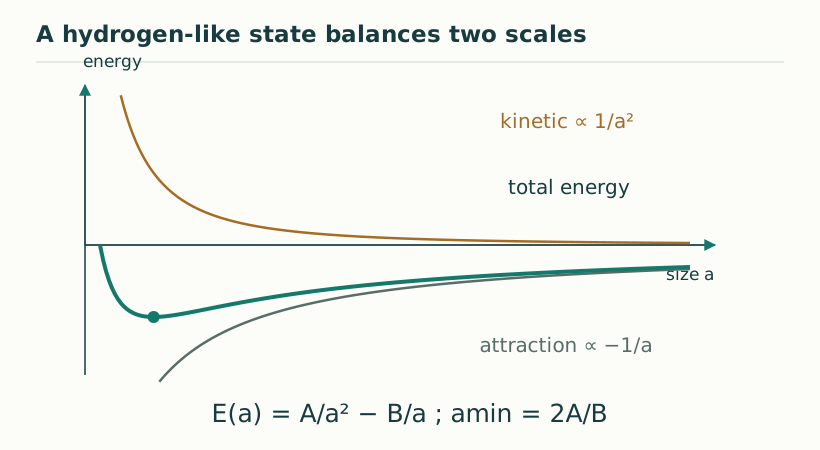
The variational energy E(a) = A/a² − B/a has its minimum at a = 2A/B for positive A and B. Supplied kinetic and attractive terms therefore establish a binding scale, while their strength remains an input to this calculation.
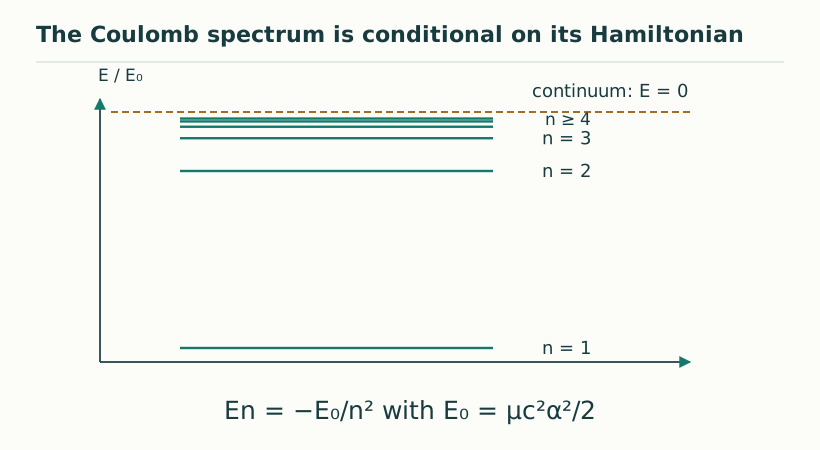
The nonrelativistic Coulomb levels follow Eₙ = −E₀/n² and approach the zero-energy continuum threshold. The dimensionless diagram displays the supplied Hamiltonian's spectrum before radiative and relativistic corrections.
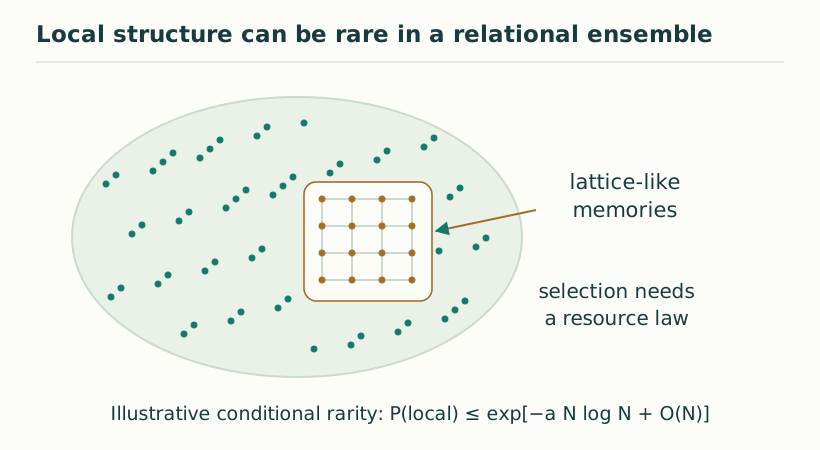
A relational ensemble can contain a small subset of lattice-like memories. In the stated permutation model its rarity is exponential in N log N, distinguishing the construction of a local example from a mechanism that selects it.

Generative order, physical clock duration, and experienced or theological time carry different questions and kinds of evidence. This map helps formulate possible connections without identifying those meanings by vocabulary alone.
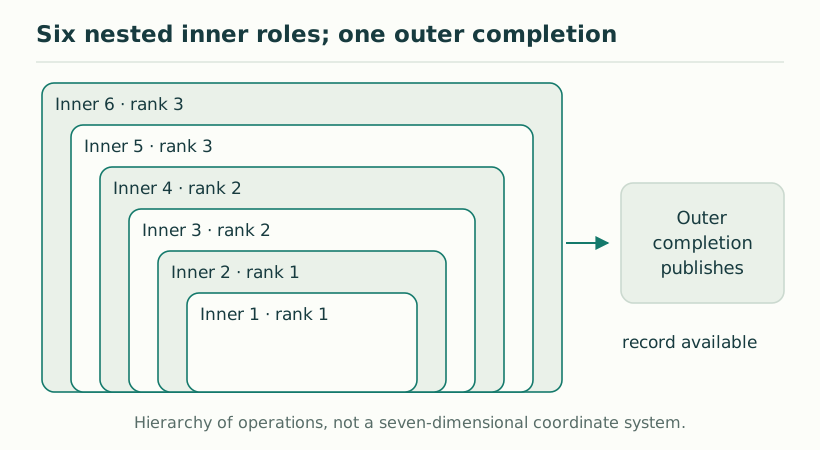
Six nested inner roles have paired-readout ranks 1, 1, 2, 2, 3, 3 in the illustrated construction. Outer completion publishes the retained record; the enclosures represent dependencies rather than independent time axes.
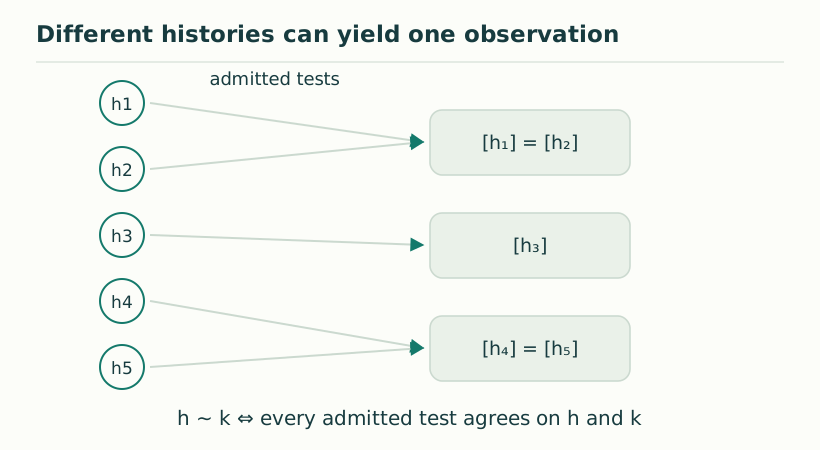
Histories belong to the same observational class when every admitted test gives the same result. Expanding the test language can separate previously equivalent histories and refine the resulting quotient.
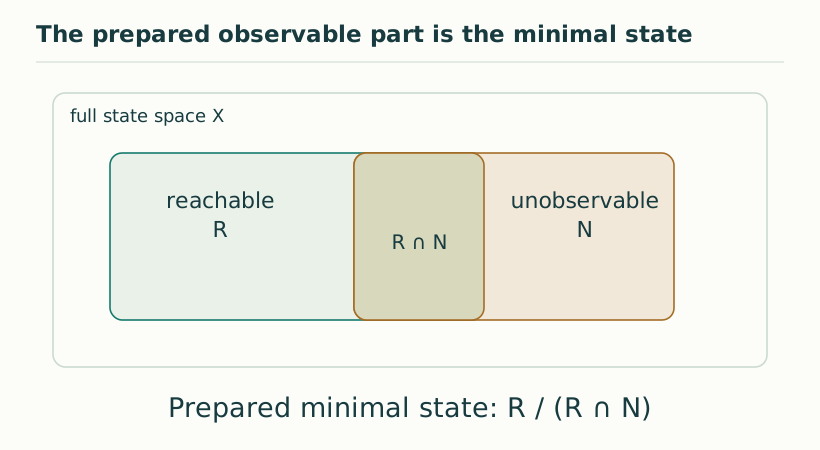
The prepared minimal state of a linear interface is R/(R∩N): reachable information with unobservable directions removed. Its size depends on both the available preparations and the future tests.
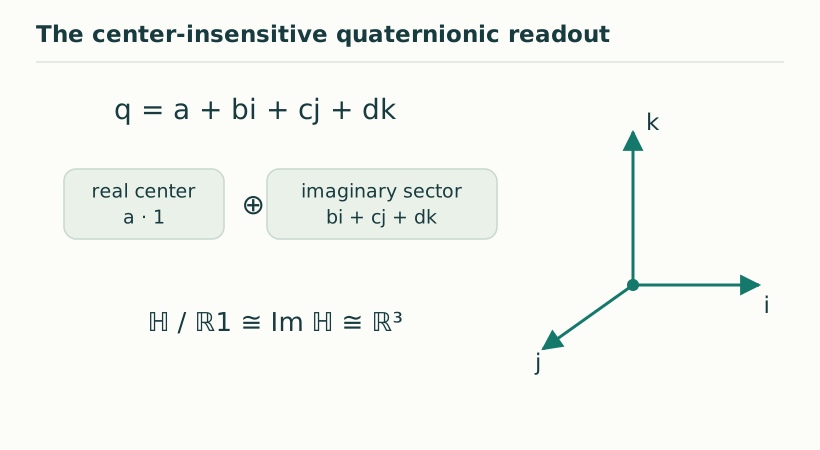
Under the stated associative positive-norm and noncommutation hypotheses, the carrier is quaternionic. Removing its real center leaves a three-dimensional imaginary readout; spatial dynamics requires further structure.
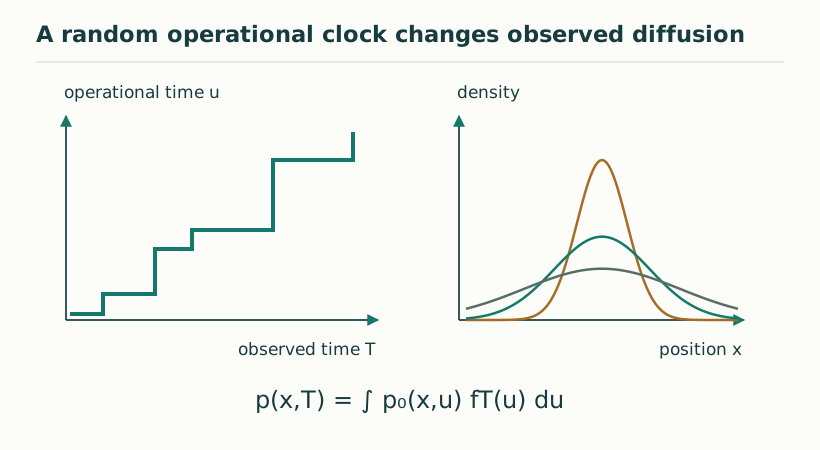
An intermittent operational clock changes how a diffusion process is sampled in outer time. Flat clock segments describe waiting periods and can produce memory in the observed process.
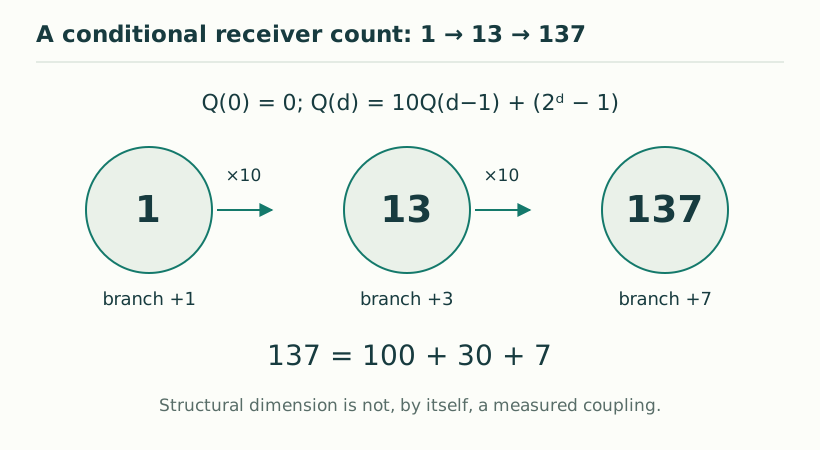
The selected receiver recursion Q(d) = 10Q(d−1) + (2ᵈ − 1) gives 1, 13, and 137 from Q(0) = 0. This exact finite count needs a normalized response and physical matching before its reciprocal can be identified with a coupling.
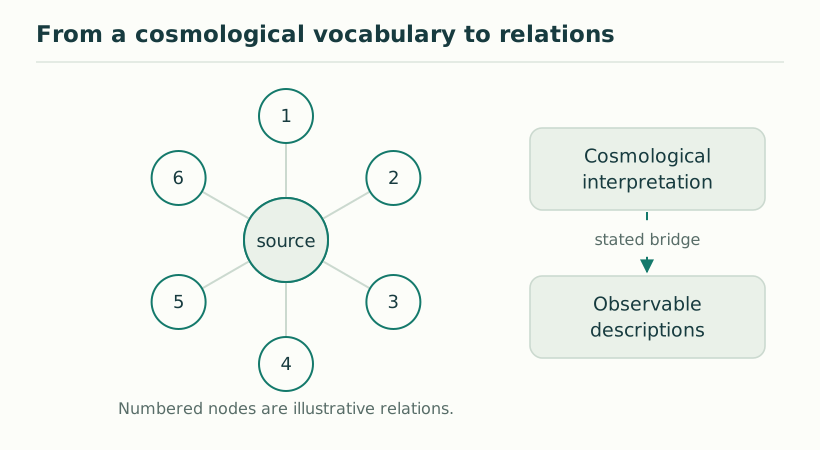
The SMM vocabulary connects one source, relational plurality, and observer-facing descriptions. The layout is a conceptual reading aid and does not assign physical positions to metaphysical terms.
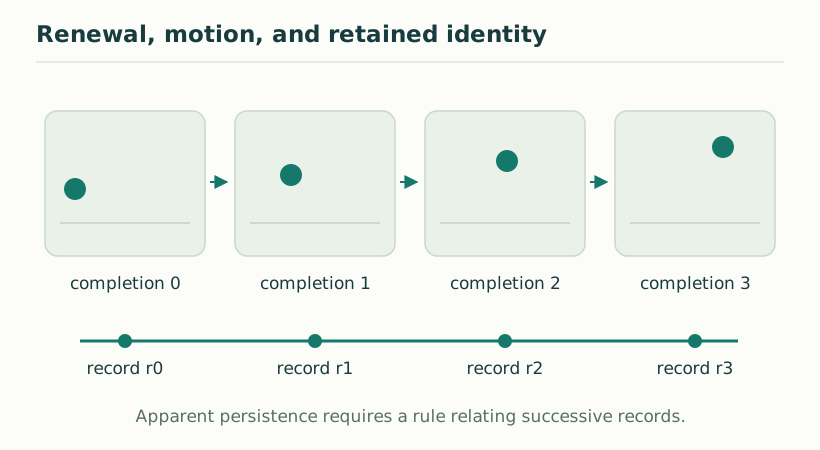
Corresponding markers in successive configurations make a history of motion describable. A physical trajectory additionally needs elapsed duration, identity rules, and a law governing transport.
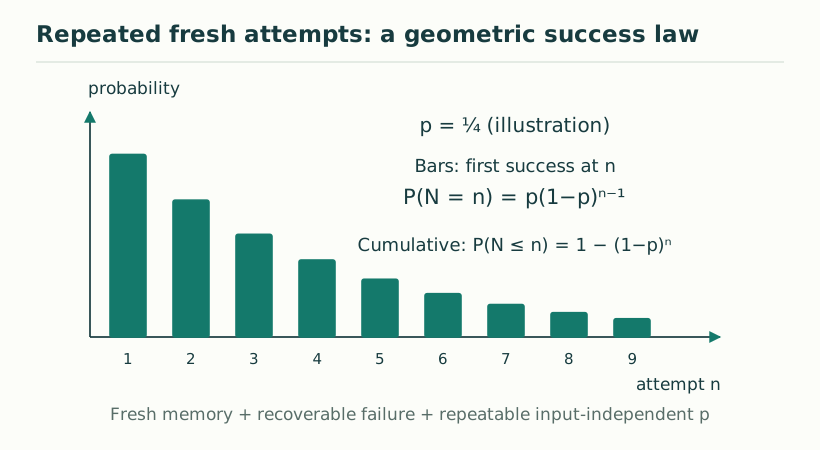
Independent fresh attempts with success probability p give P(first success at n) = (1−p)ⁿ⁻¹p. The plotted example uses p = 1/4 and requires failed attempts to restore the input before another trial.
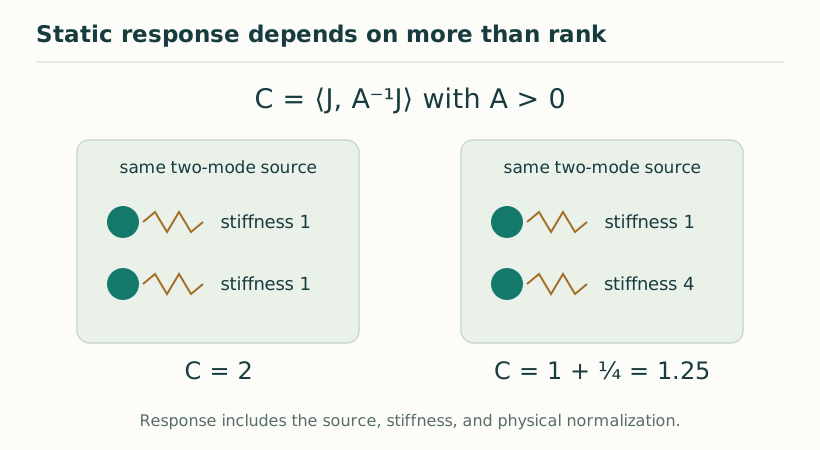
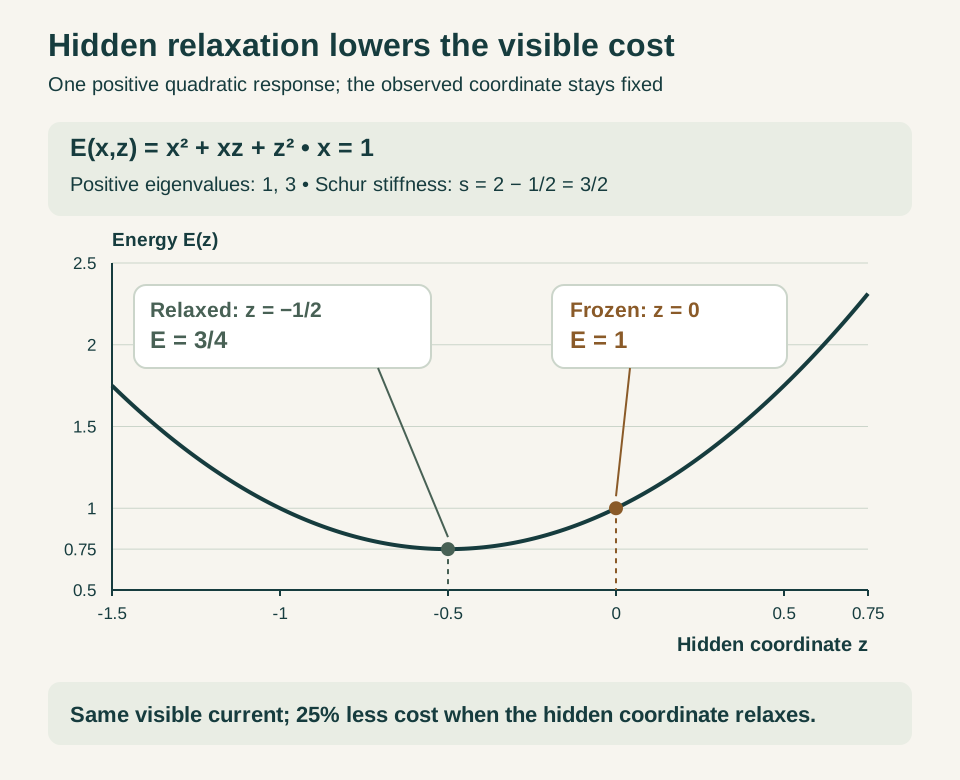
Two systems of equal dimension can have capacities 2 and 5/4 because their stiffness operators differ. Consistent basis changes preserve each response, while changing physical stiffness changes the capacity.
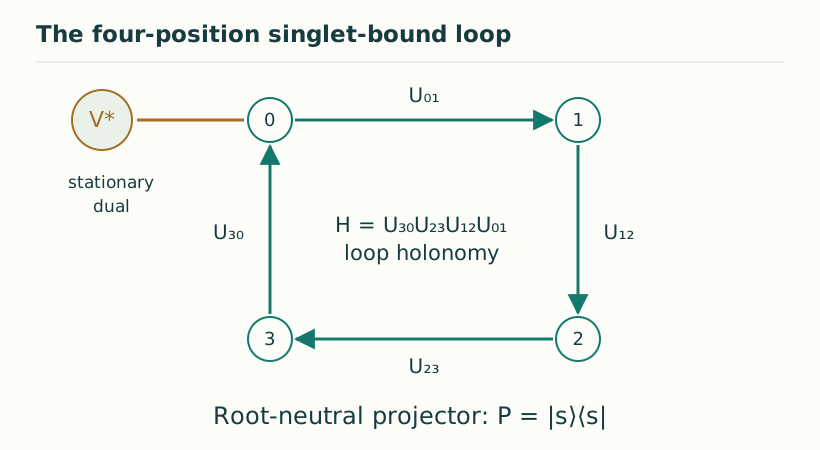
A mobile carrier travels around four supplied sites while a stationary dual remains at the root. The root singlet penalty and link holonomy specify the finite model's response and spectral questions.
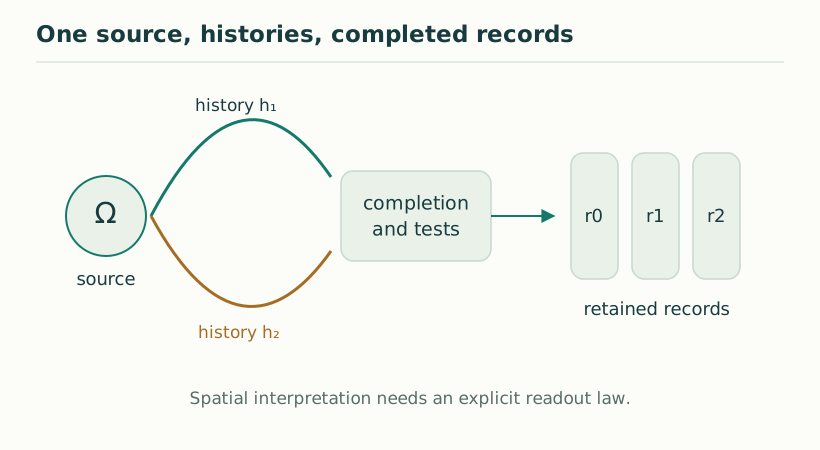
Composable source histories pass through completion before retained records become available. The source is a generative premise rather than a point assumed to be already located in physical space.
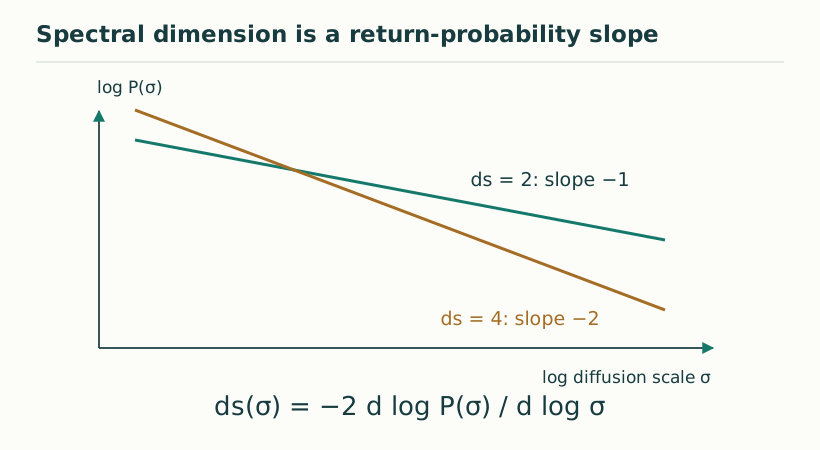
For the toy return law P(σ) = Cσ⁻ᵈˢ/², spectral dimension is minus twice the log–log slope. The illustrated slopes correspond to dimensions two and four and are exact examples rather than measured dimensional flow.
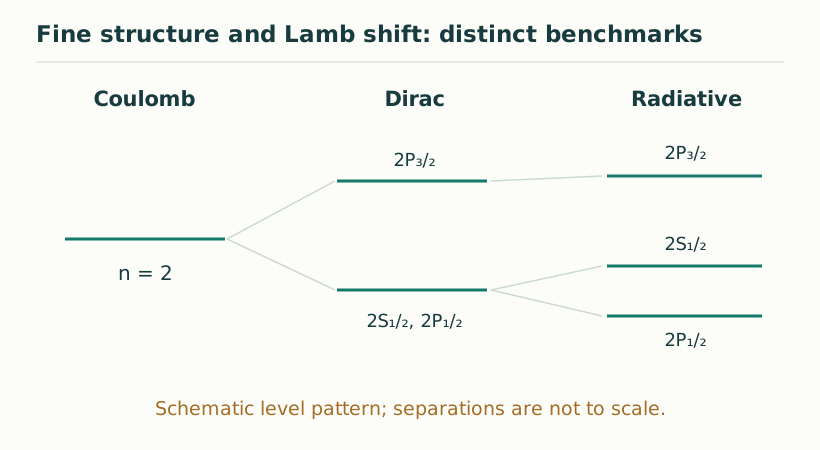
The schematic separates Dirac fine structure from the radiative splitting of 2S₁/₂ and 2P₁/₂. Its deliberately exaggerated level separations organize the hydrogen benchmarks without plotting measured scales.
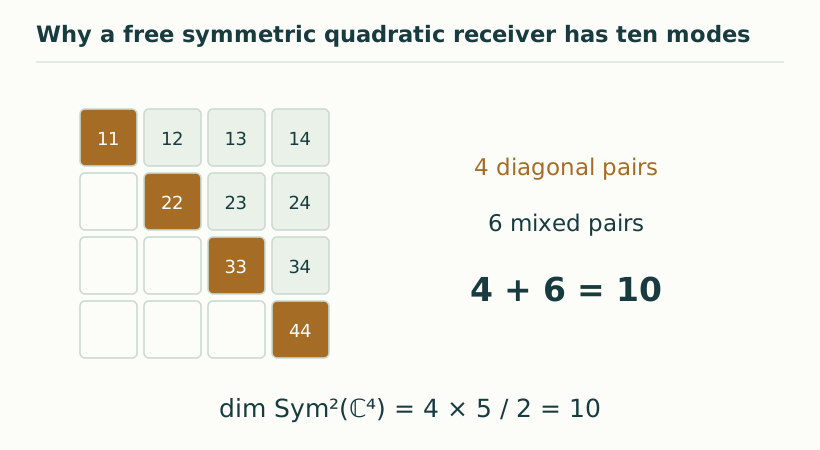
A free symmetric quadratic receiver on a four-dimensional complex input has four diagonal and six unordered off-diagonal modes. Thus dim Sym²(ℂ⁴) = 10, conditional on choosing this receiver space.
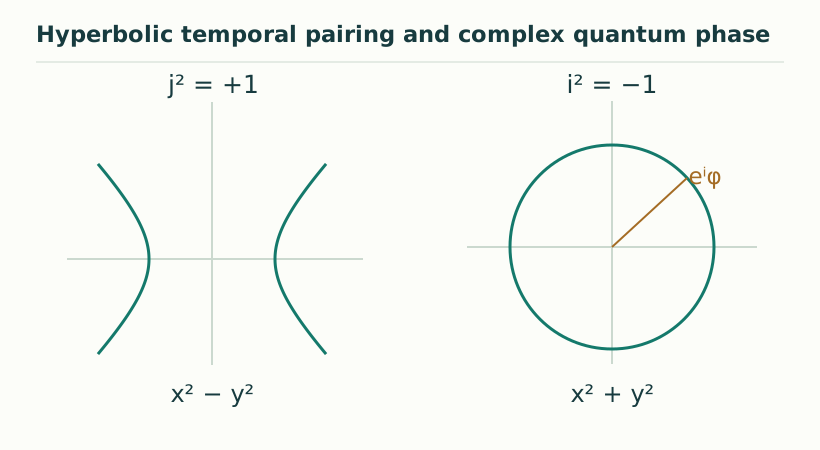
Split-complex j² = +1 preserves a hyperbolic quadratic form, while ordinary complex i² = −1 supports circular phase. An explicit interface is needed when both algebras appear in a dual-time reconstruction.
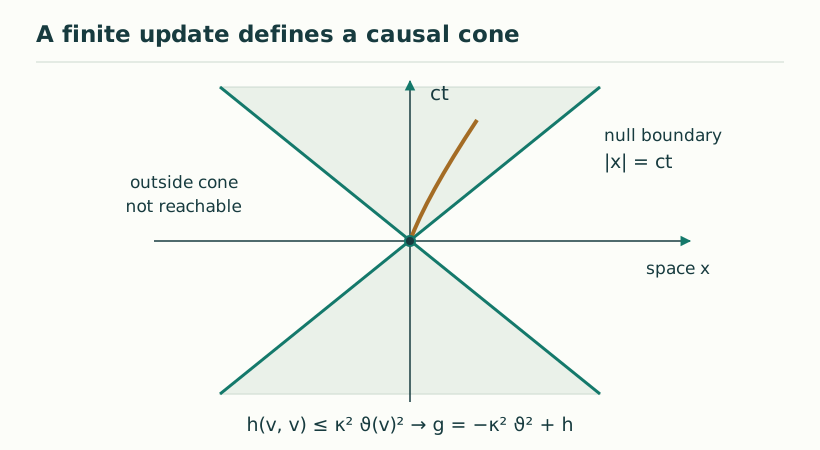
A bounded displacement per update defines a finite propagation cone in the illustrated readout. A common Lorentzian metric and shared field speed require compatible clock, detector, and transport assumptions.
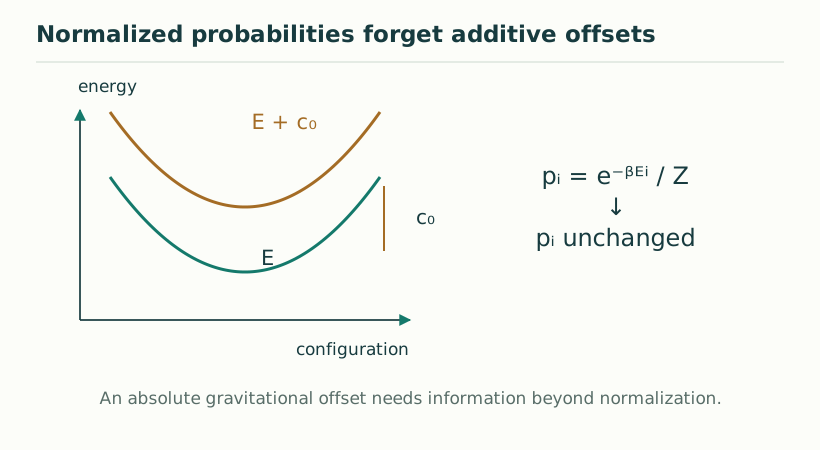
Adding a constant energy offset multiplies all Boltzmann weights by the same factor and leaves normalized probabilities unchanged. These probabilities therefore cannot determine an absolute vacuum-energy baseline by themselves.
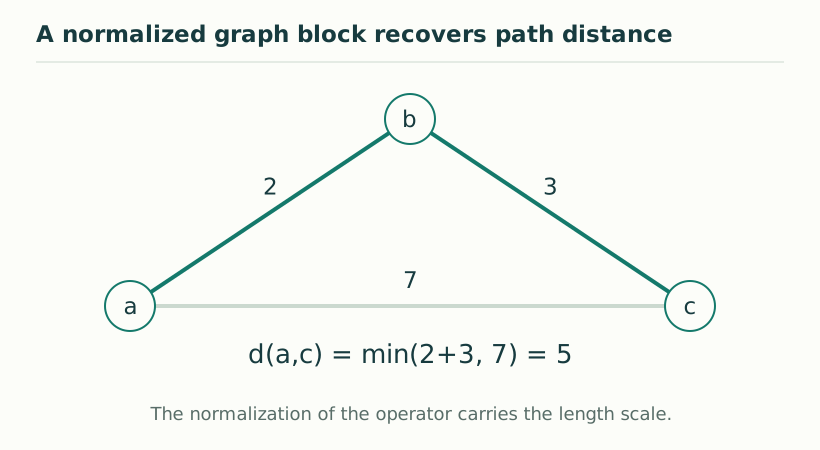
In the specified normalized graph block, distance equals weighted shortest-path distance. The route with edge lengths two and three has length five, shorter than the direct edge of length seven.
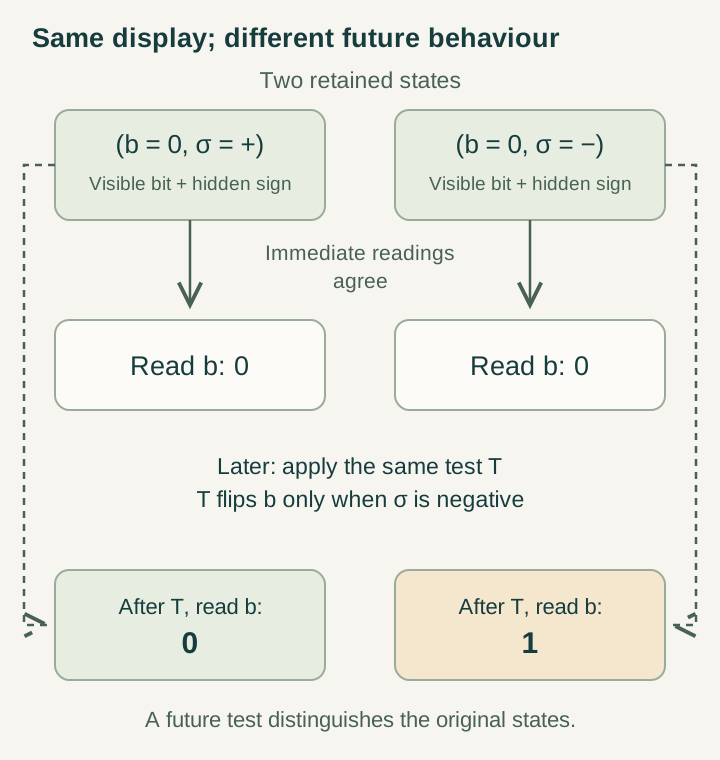
Two retained states can display the same immediate value while responding differently to a later admitted operation. Predictive equivalence must therefore compare future tests, not just the present display.
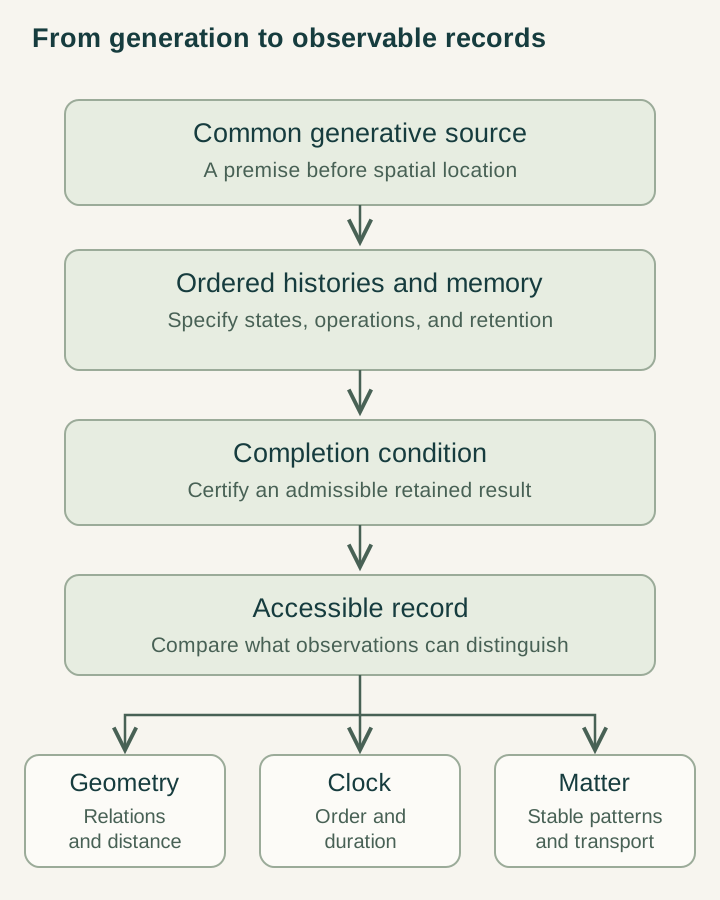
Source histories, completion, and retained records form the conceptual interface for geometry, clocks, and matter readouts. The diagram organizes those dependencies while leaving each physical readout to be defined independently.
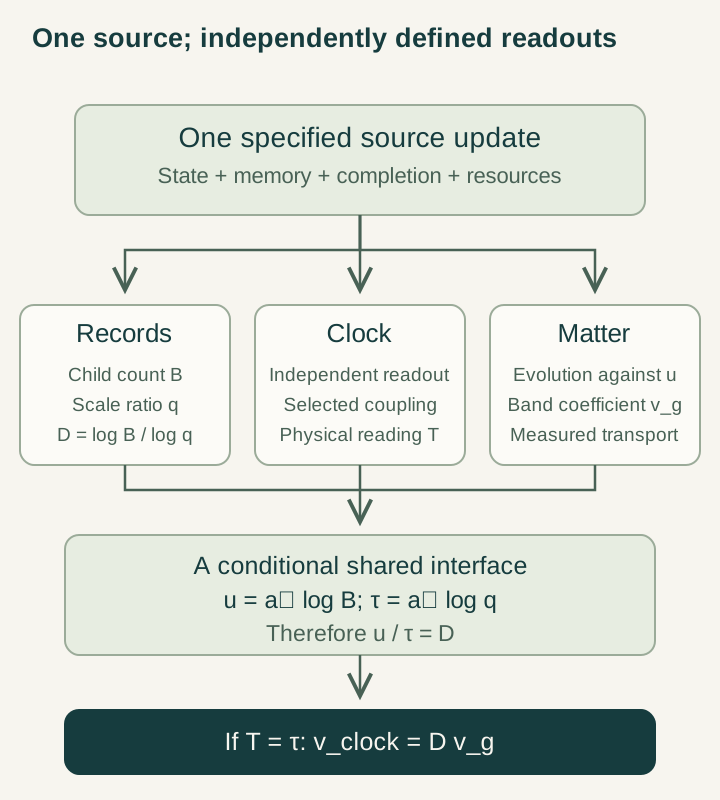
Record geometry, clock readings, and matter propagation are separate observables in a common-source programme. A shared logarithmic encoder and protected-clock interface can relate them conditionally; the physical selection of that interface remains a research task.
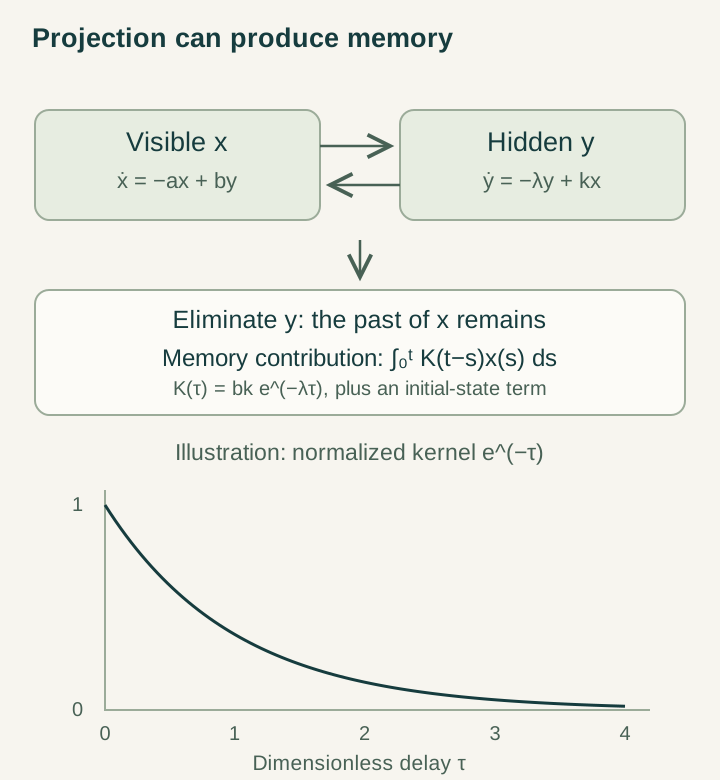
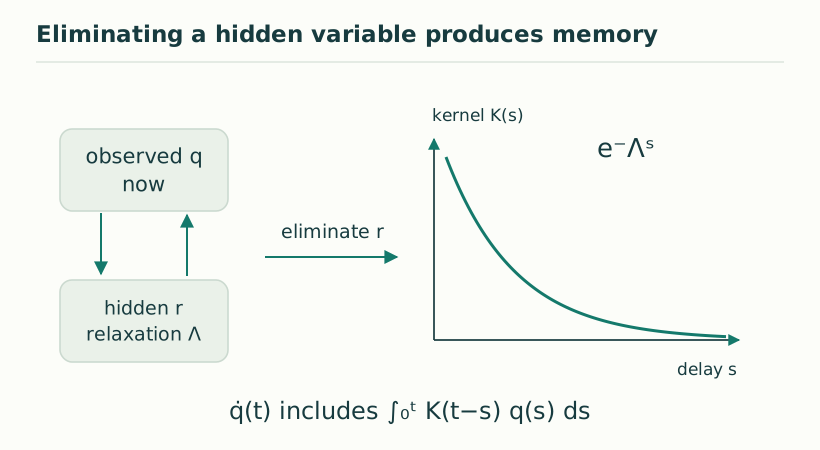
A two-variable local system becomes history-dependent after its relaxing hidden variable is eliminated. The exponential kernel records the exact delayed contribution under the specified linear dynamics.
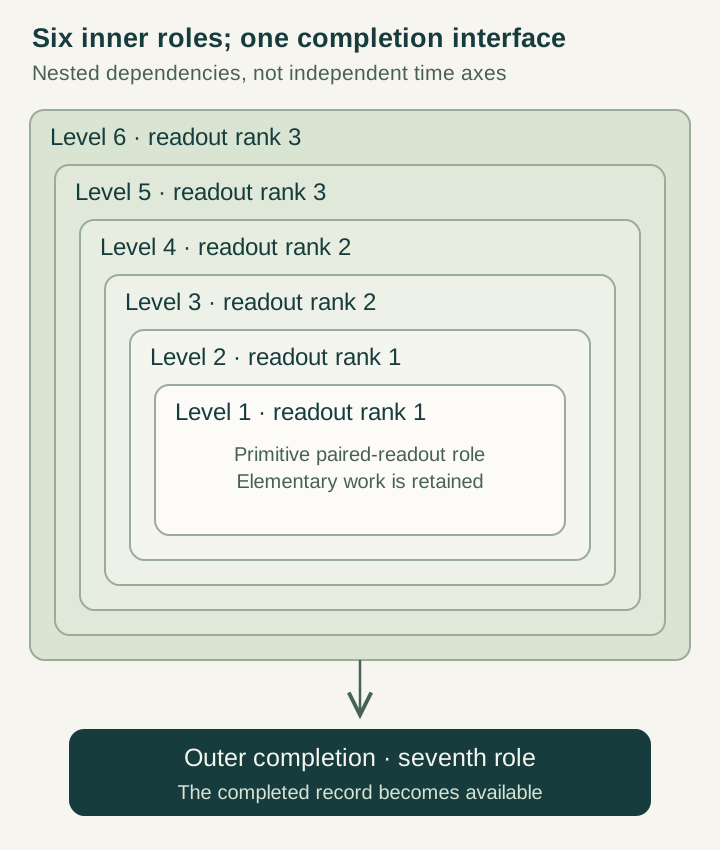
Six nested functional roles prepare a record that a seventh completion interface makes available. The paired ranks belong to the stated readout example, and the enclosures indicate dependencies rather than spatial shells.
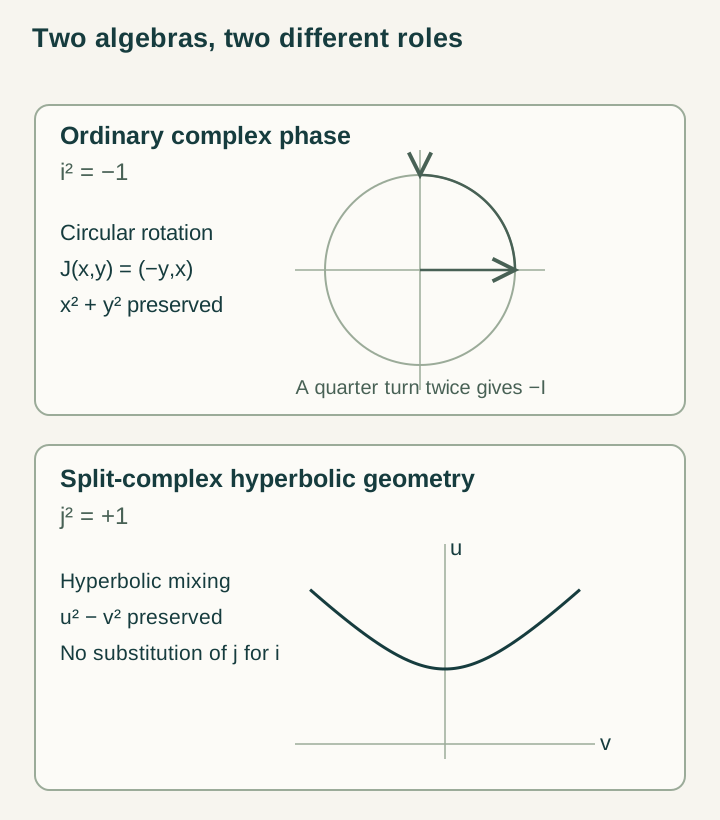
An ordinary complex rotation preserves x² + y², while a split-complex transformation preserves u² − v². The two units serve distinct algebraic roles that a source model must connect explicitly.
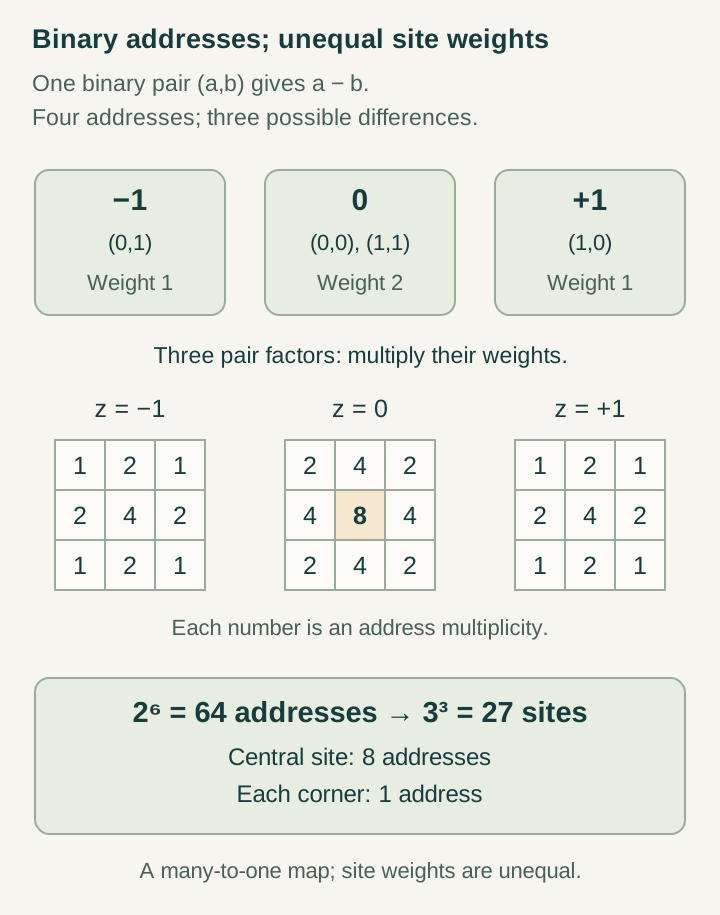
Three independent binary-pair differences map 64 addresses to 27 spatial sites with unequal multiplicities. The center has eight preimages and each corner one, so a uniform site measure needs an additional weighting rule.
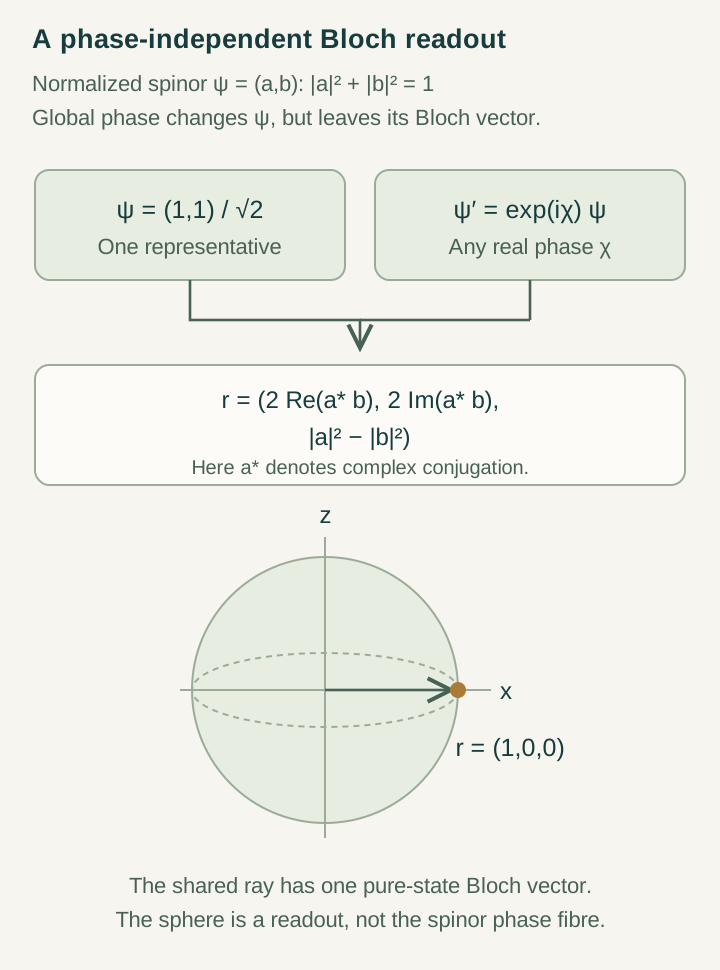
The normalized spinor Bloch map sends common-phase-related inputs to the same unit vector. The sphere represents pure-state directions rather than a particle surface or the full phase-bearing carrier.
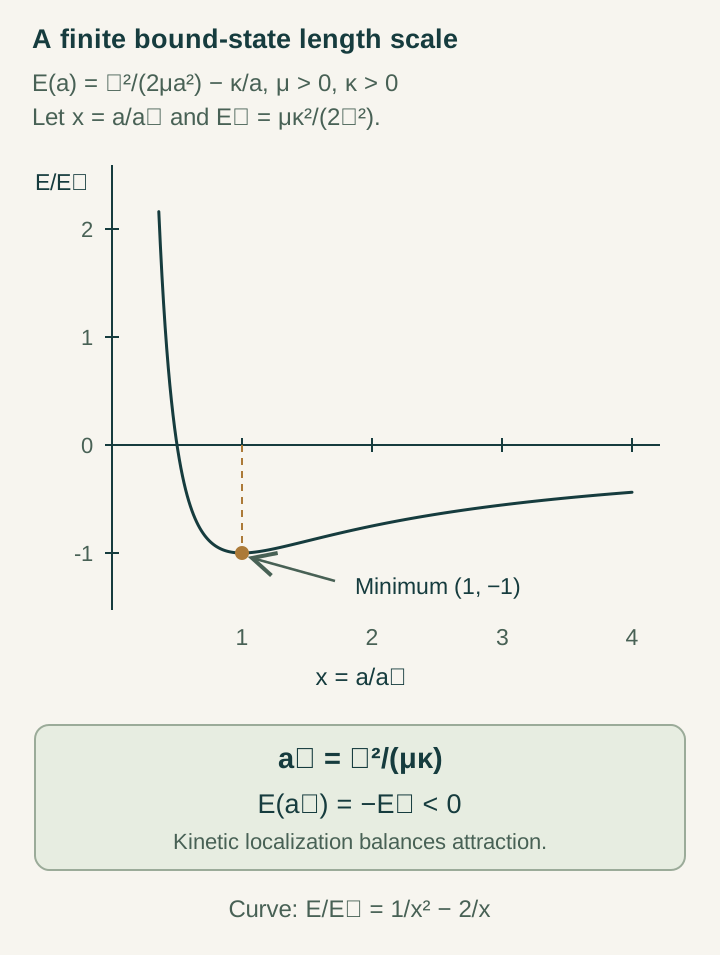
The exponential Coulomb trial family has dimensionless energy 1/x² − 2/x, minimized at x = 1. Its optimum is the exact nonrelativistic 1s state for the supplied Hamiltonian and reduced-mass scale.
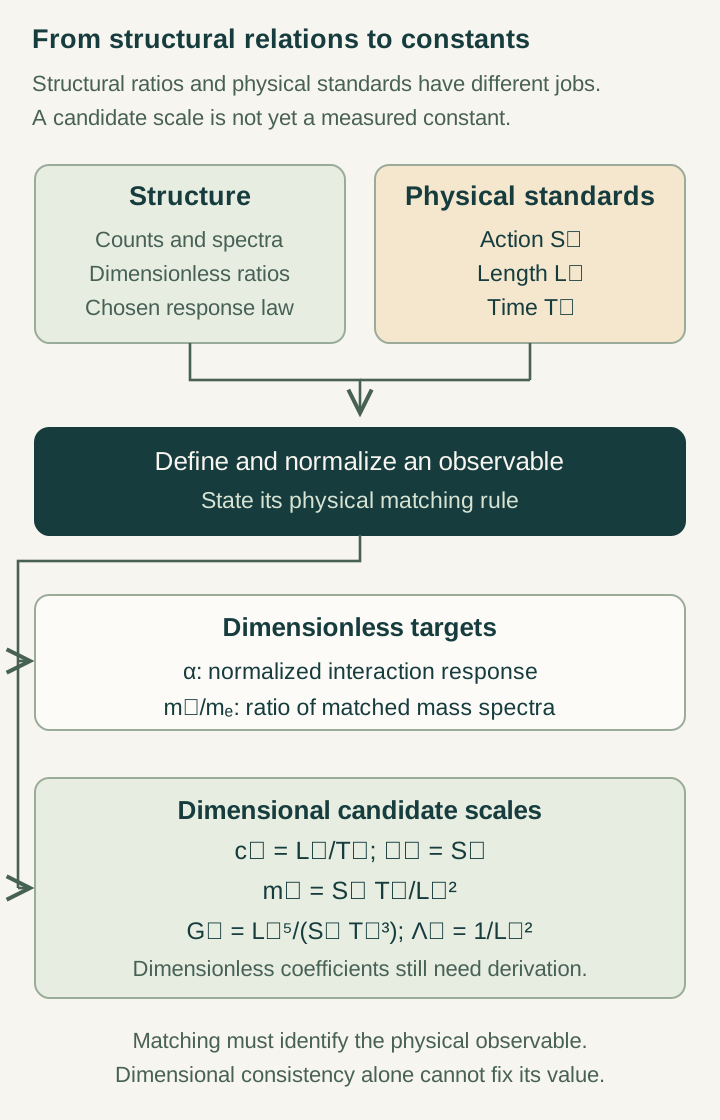
Structural counts and spectra enter normalized observables through an action, length, and duration dictionary. The map distinguishes dimensionless targets from dimensional scales and keeps geometric Λ separate from vacuum-energy density.
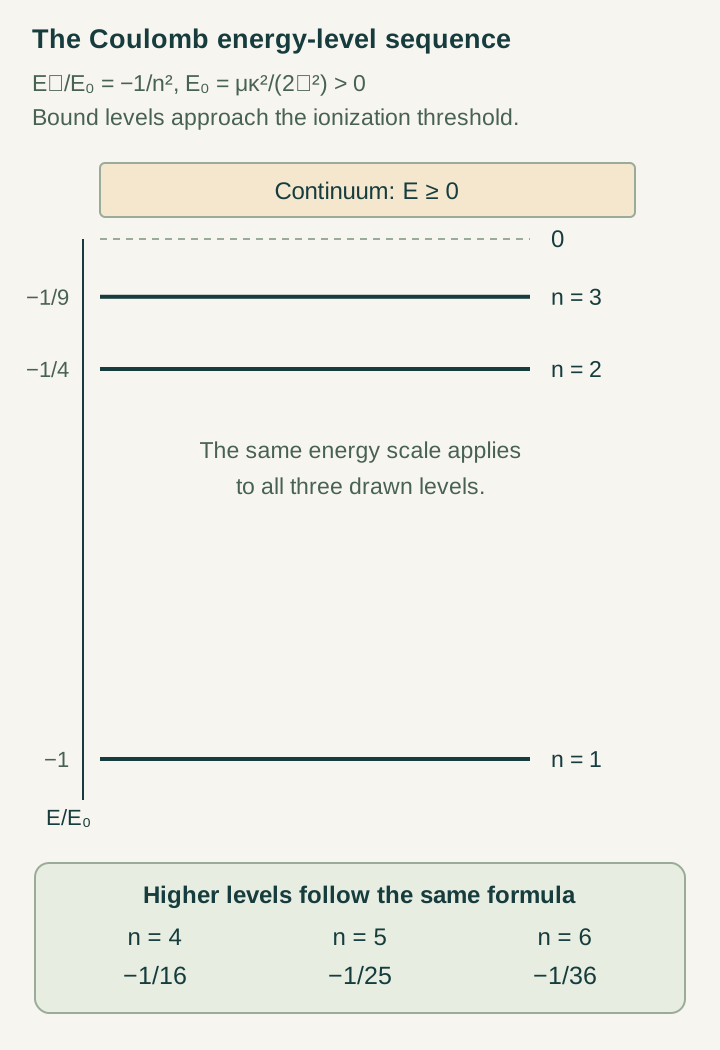
The Coulomb energy ratios −1/n² approach the continuum threshold from below. These exact nonrelativistic ratios exclude radiative, relativistic, finite-size, and recoil corrections beyond the reduced-mass treatment.
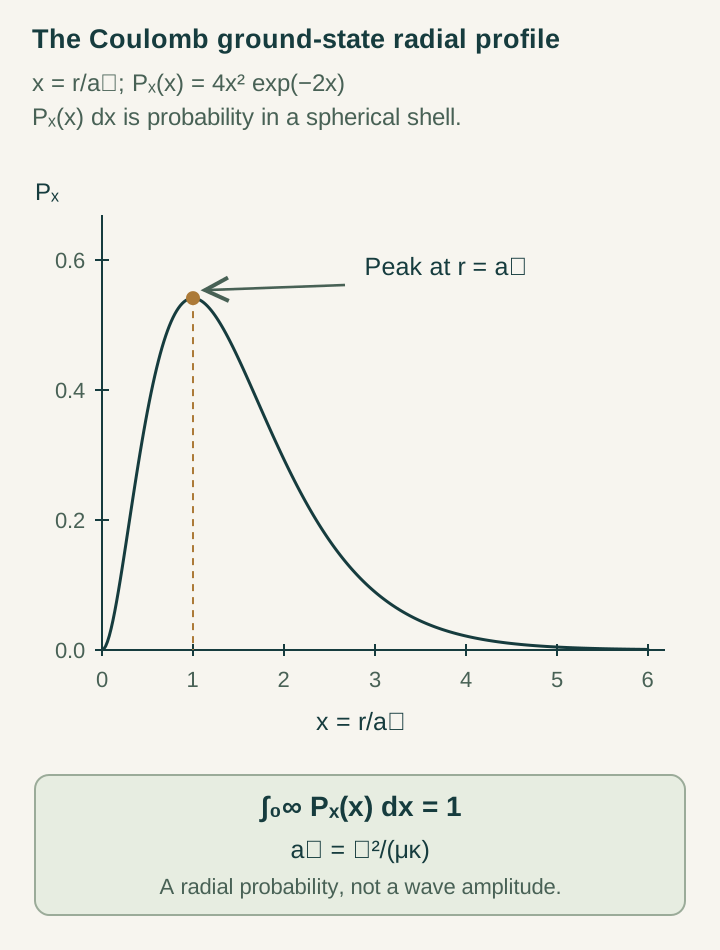
The normalized 1s radial probability 4x²e⁻²ˣ peaks at x = 1 and integrates to one. Its x² factor is the spherical-shell measure, so the curve differs from both spatial probability density and wave amplitude.
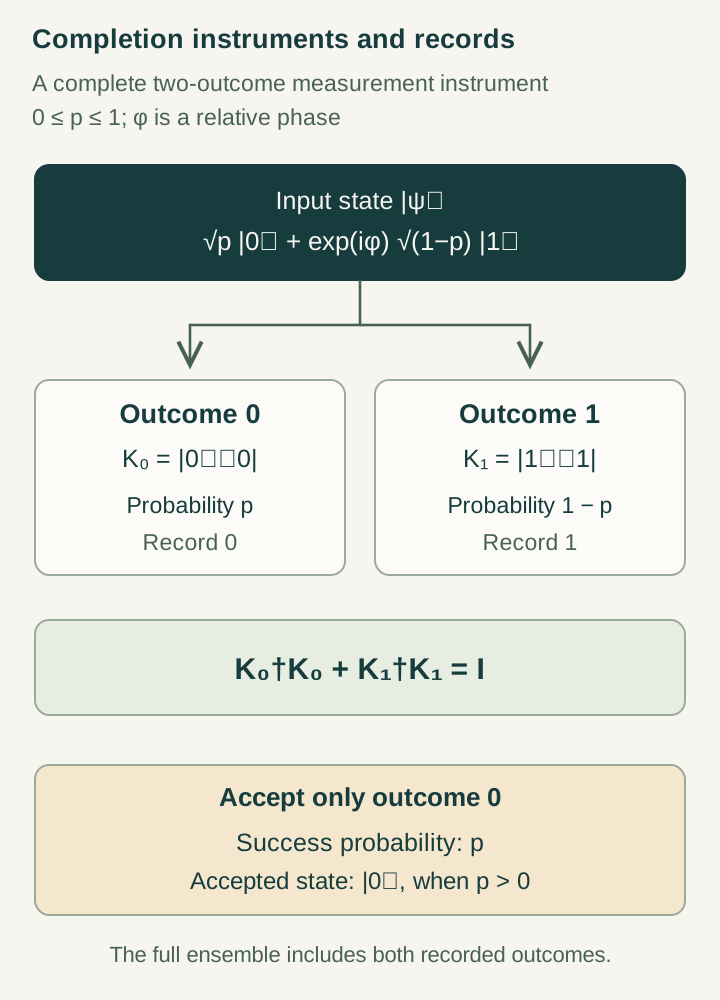
A normalized two-outcome projective instrument gives probabilities p and 1−p, with Kraus effects summing to identity. Selecting one outcome as completion preserves its success probability as part of the operational description.
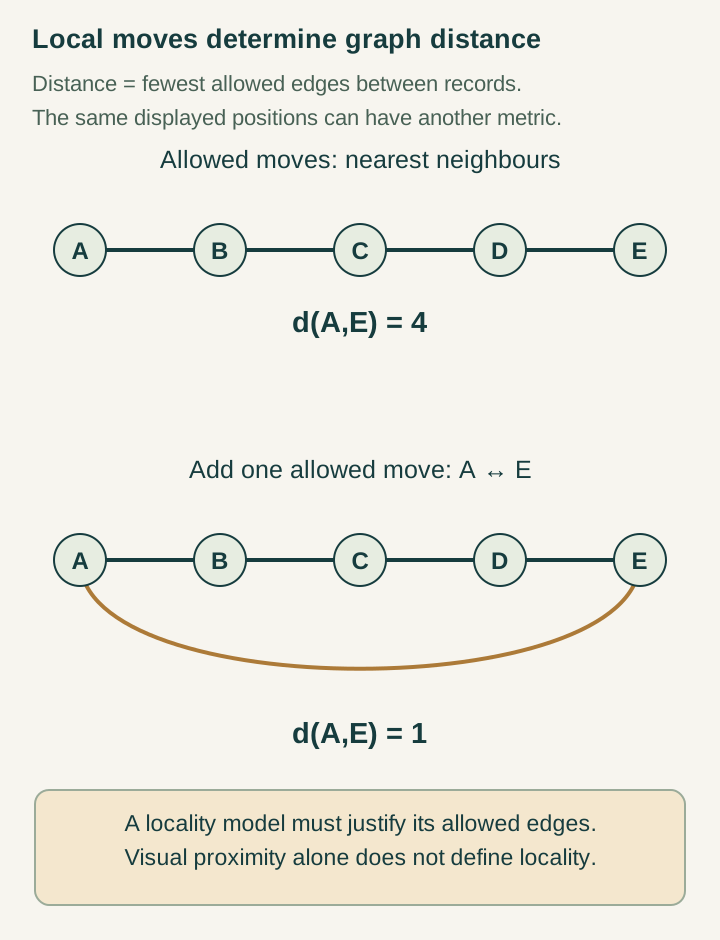
A five-node chain has endpoint distance four; adding an allowed direct move reduces that distance to one. Graph distance is fixed by the permitted elementary operations, independently of the drawing's Euclidean layout.
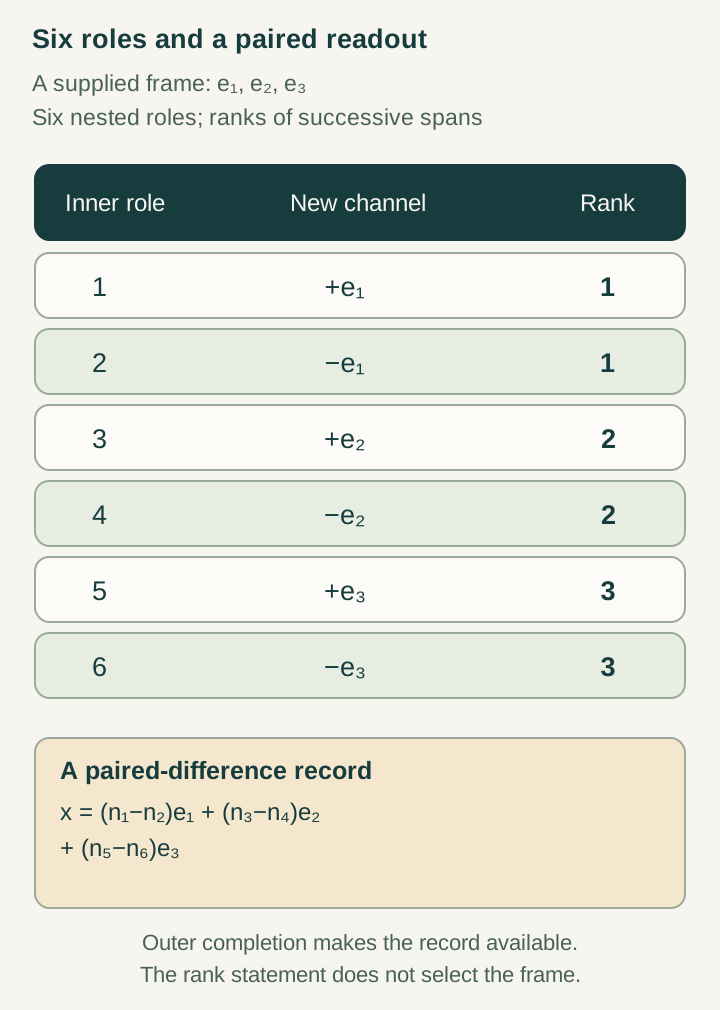
Signed channels ±e₁, ±e₂, ±e₃ have successive span ranks 1, 1, 2, 2, 3, 3. This exact paired-frame calculation supplies a three-component readout under the chosen frame and nested-role assumptions.
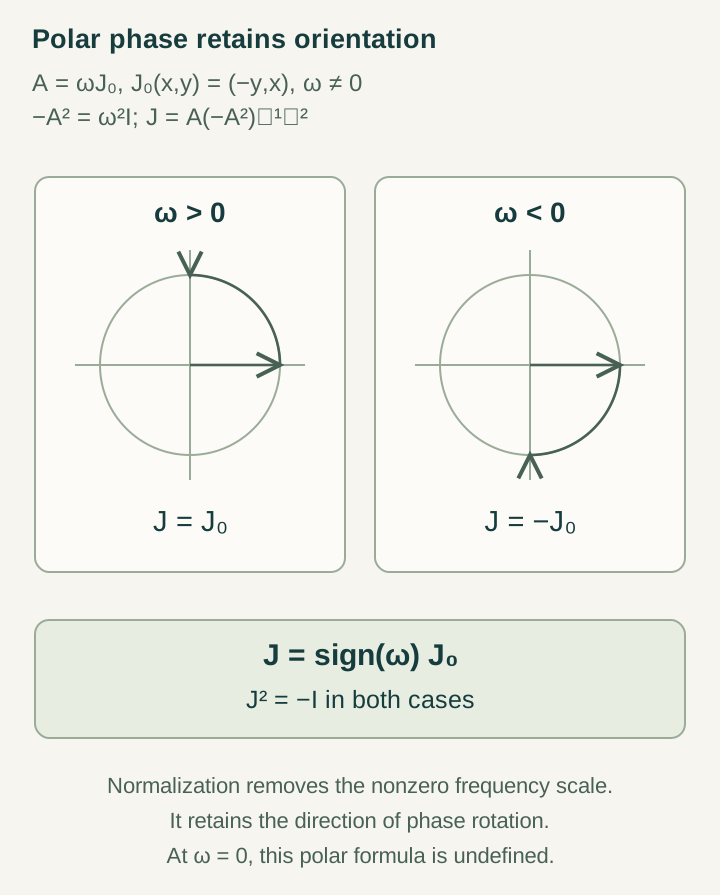
Polar normalization of an invertible planar skew block removes frequency magnitude while retaining orientation and gives J² = −I. Zero-frequency directions require separate treatment, and this ordinary complex structure differs from split-complex j.
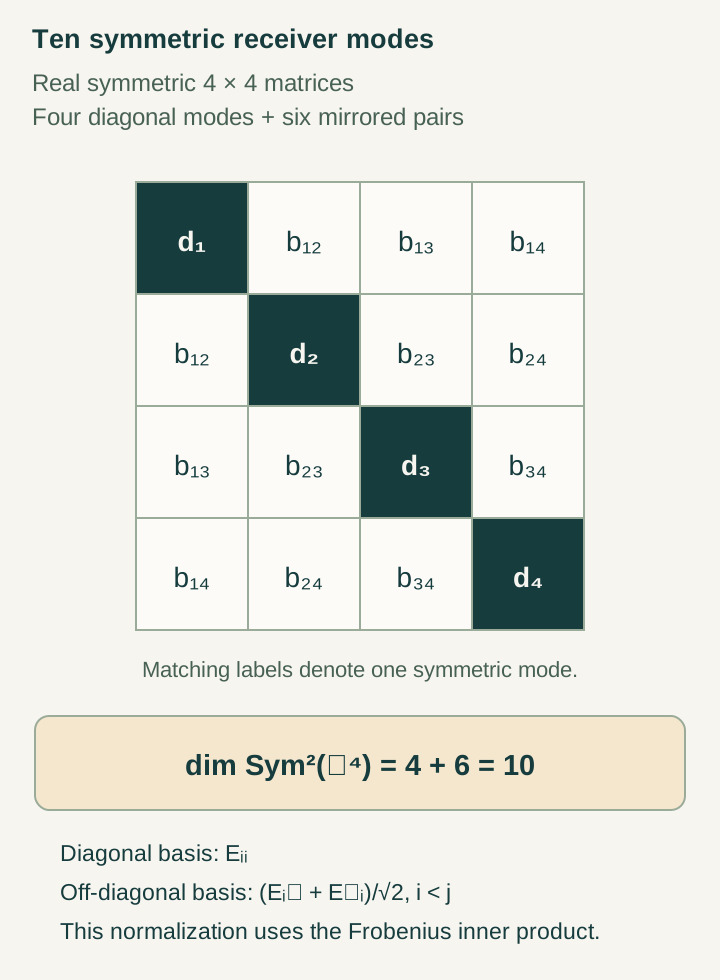
Four diagonal and six normalized off-diagonal basis matrices span the ten-dimensional space Sym²(ℝ⁴). Matching mirrored entries describe one symmetric mode, while choosing this space as a physical receiver is a modeling step.
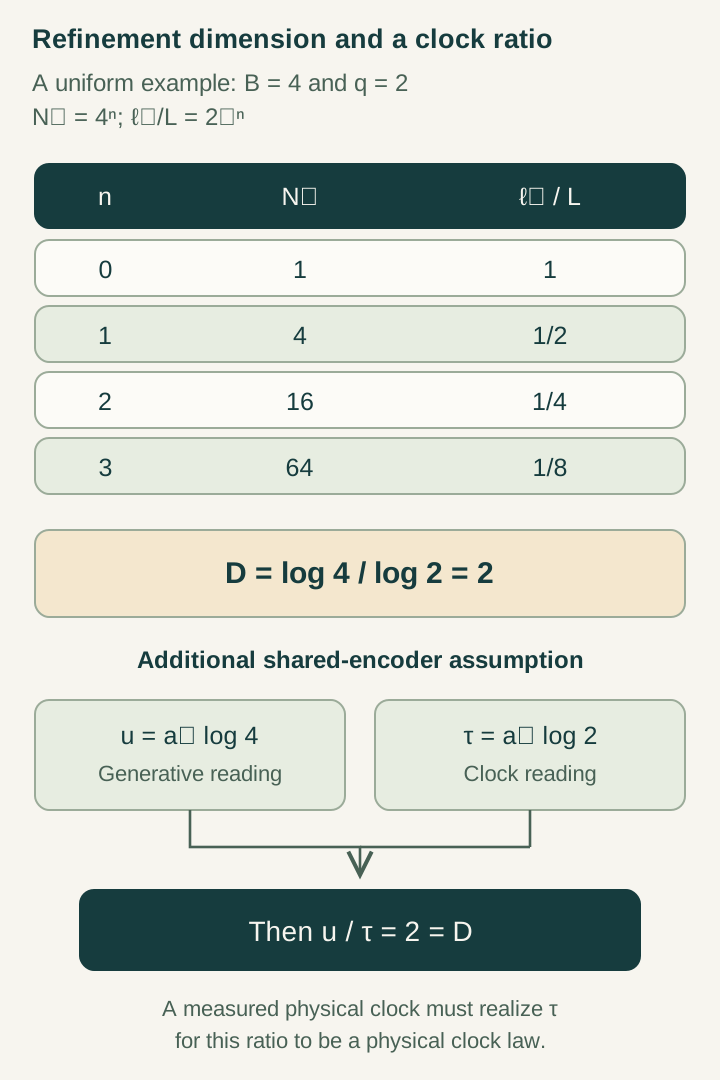
The refinement example B = 4 and r = 1/2 gives the logarithmic count-to-scale ratio D = 2. Identifying it with geometric dimension needs regularity conditions, and equality to a physical clock ratio needs the displayed shared encoder.
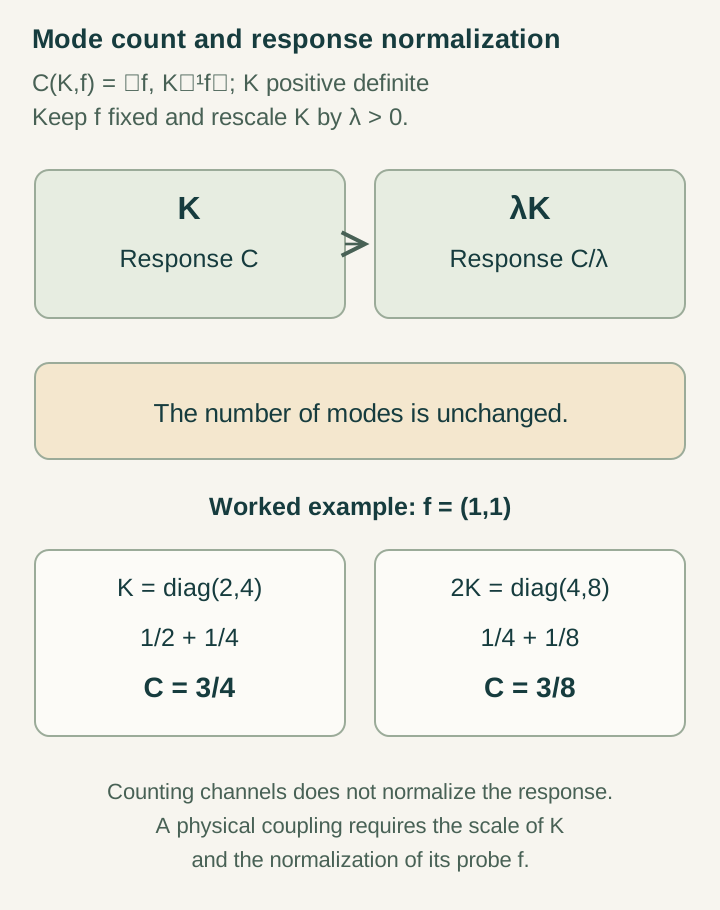
For a fixed probe, rescaling a positive stiffness K by λ changes its response from C to C/λ without changing dimension. The two-mode example falls from 3/4 to 3/8 when stiffness doubles.
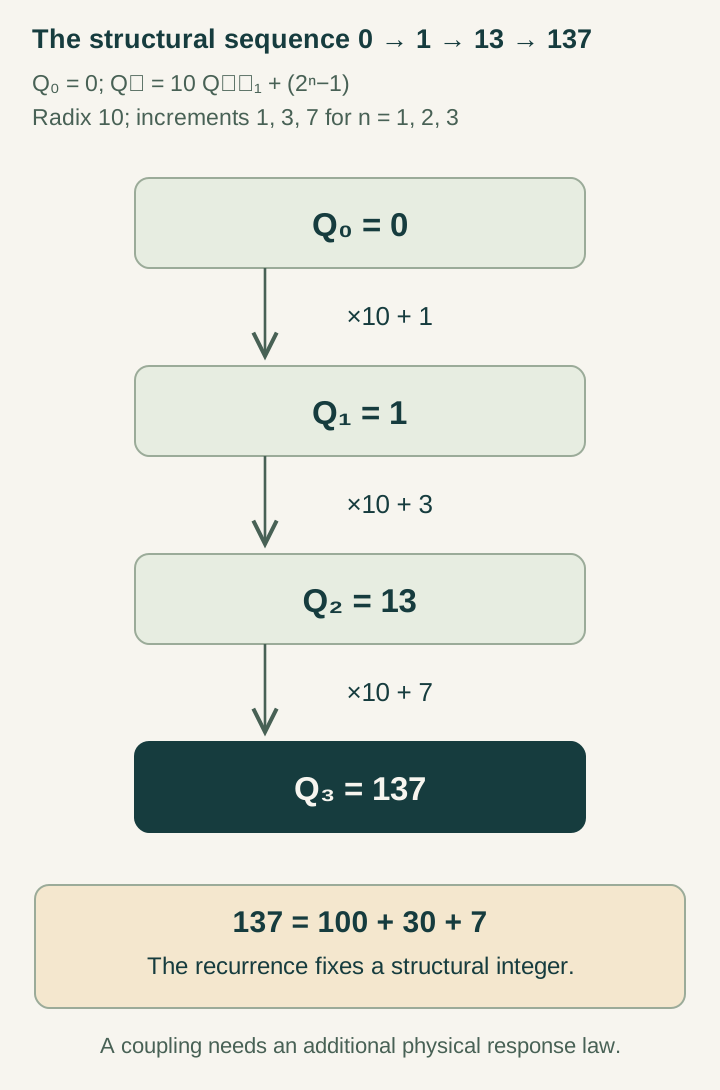
The selected radix-ten recursion with subset increments 1, 3, and 7 yields 0 → 1 → 13 → 137. The exact structural integer becomes a coupling candidate only after a separately specified response normalization and physical match.
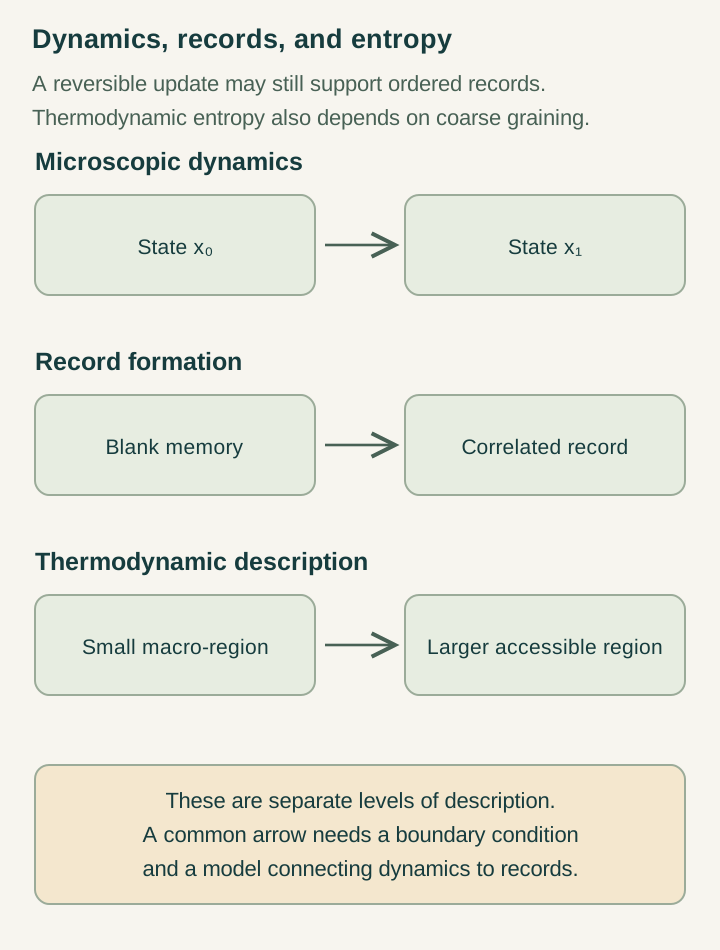
Microscopic evolution, retained correlations, and thermodynamic macro-regions define three different descriptions of change. Their arrows align only through a connecting model with suitable preparation and boundary conditions.
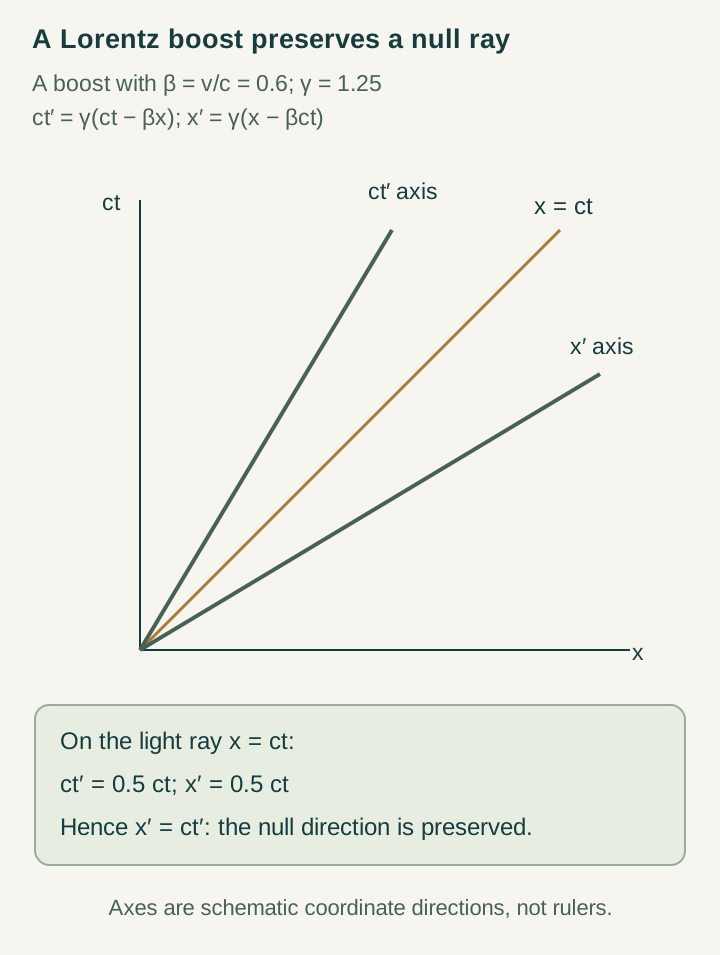
The illustrated Lorentz boost with β = 0.6 preserves the null ray x = ct. Algebraic interval preservation is exact; an SMM/DTT reconstruction must also realize the transformation using physical rods and clocks.
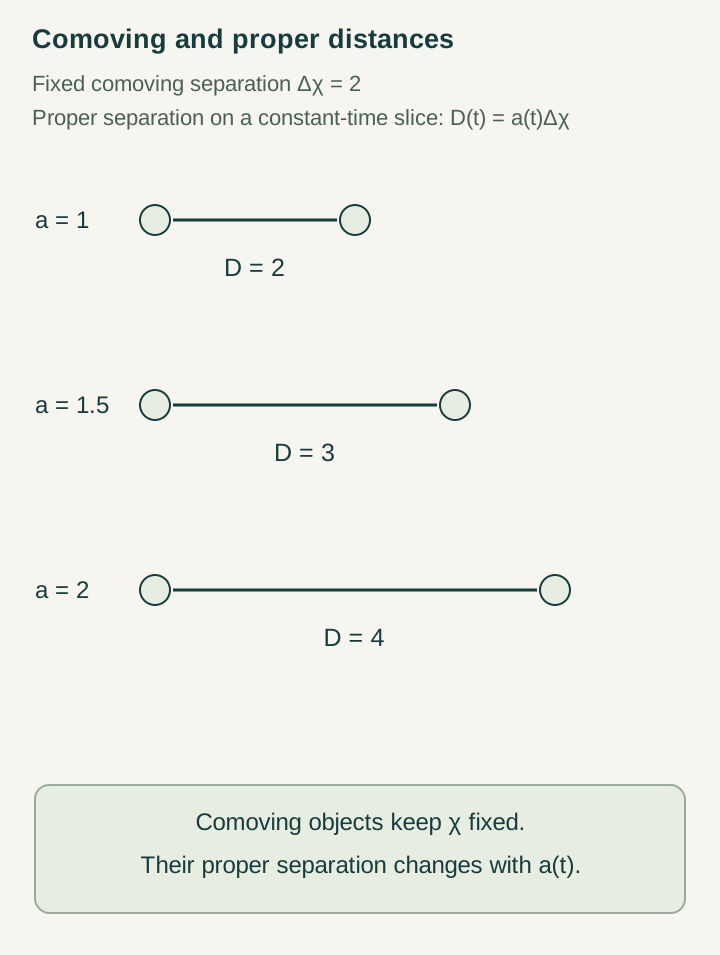
Fixed comoving separation two becomes proper separation two, three, and four as the scale factor grows. This FLRW scaling describes spatial slices rather than a microscopic expansion mechanism or stretching of bound objects.
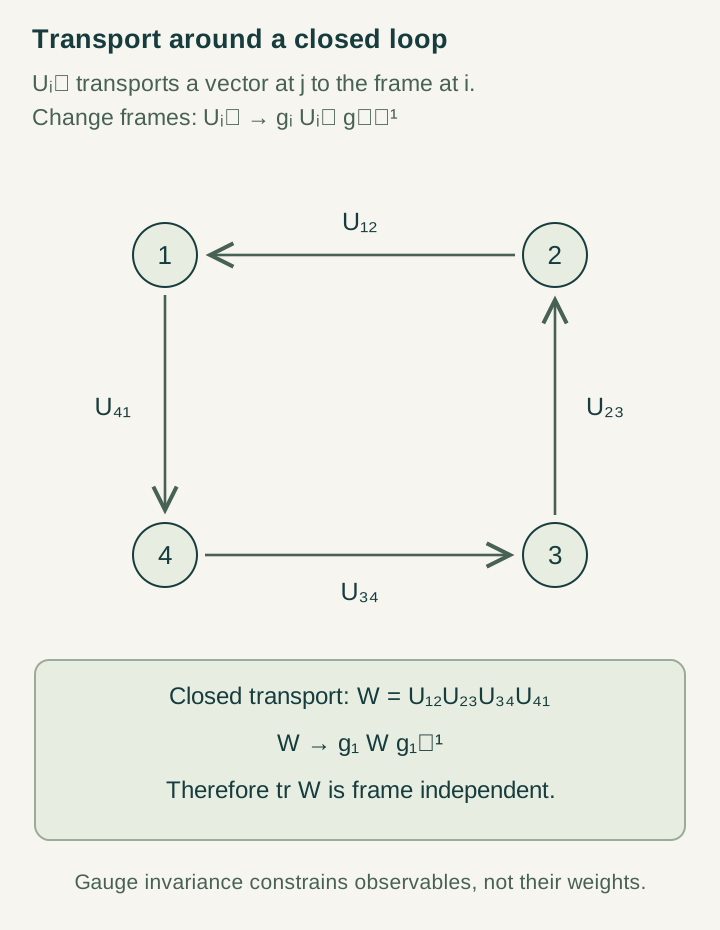
An ordered product of consistently oriented transport links is conjugated at the loop's base under local frame changes. Its trace is invariant, establishing a holonomy observable before a gauge group or action is selected.
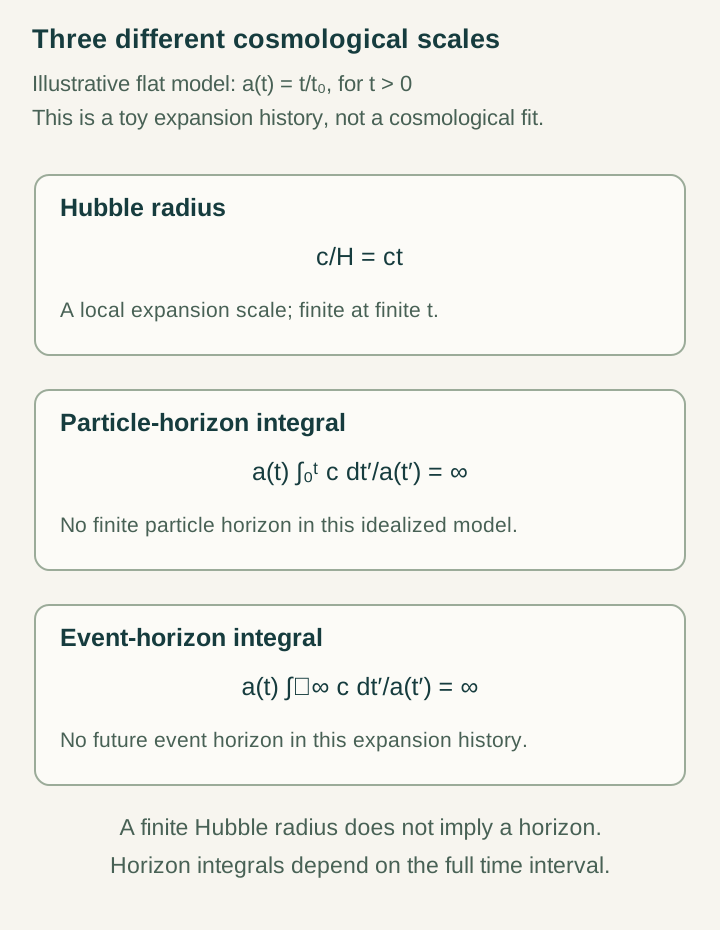
For the toy history a(t) = t/t₀ extending from zero to arbitrarily late time, the Hubble radius is finite while both displayed horizon integrals diverge. The example distinguishes a local expansion scale from particle and event horizons.
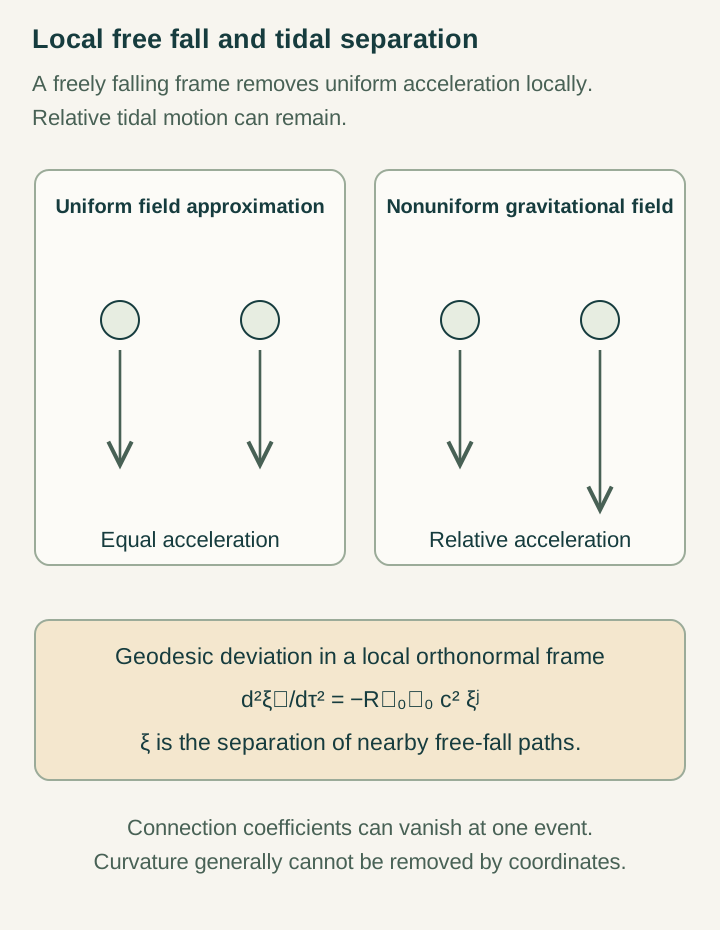
Local free fall removes a uniform acceleration while tidal separation reveals curvature through geodesic deviation. The schematic uses a stated curvature-sign convention and illustrates geometry rather than a measured force field.
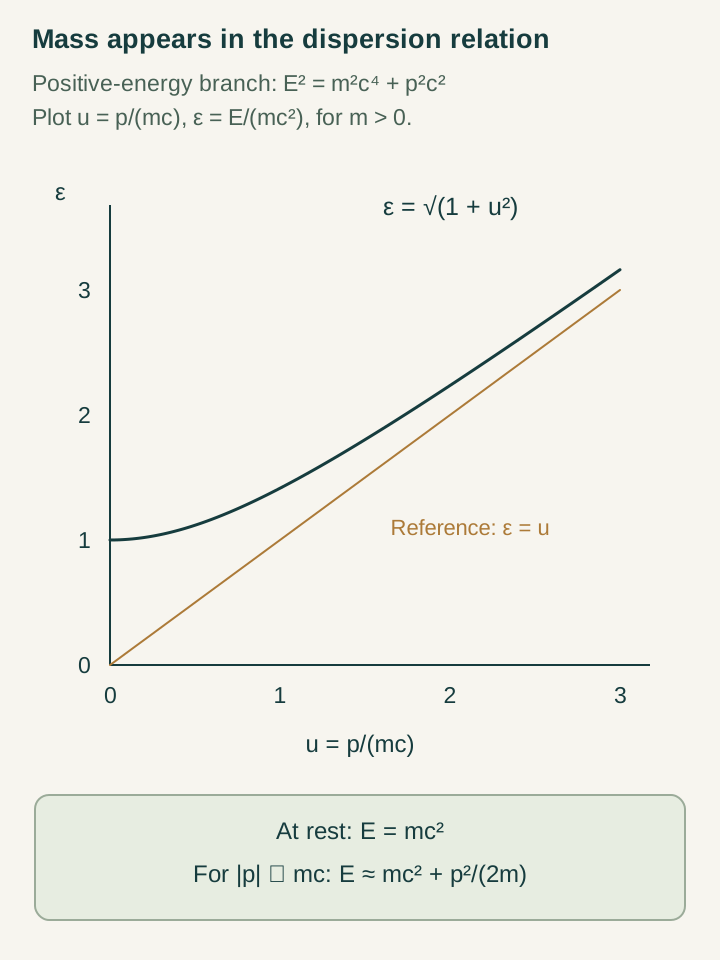
The positive relativistic energy curve contains rest energy and approaches the massless linear asymptote at high momentum. Its low-momentum expansion gives the Newtonian kinetic term under the supplied dispersion relation.
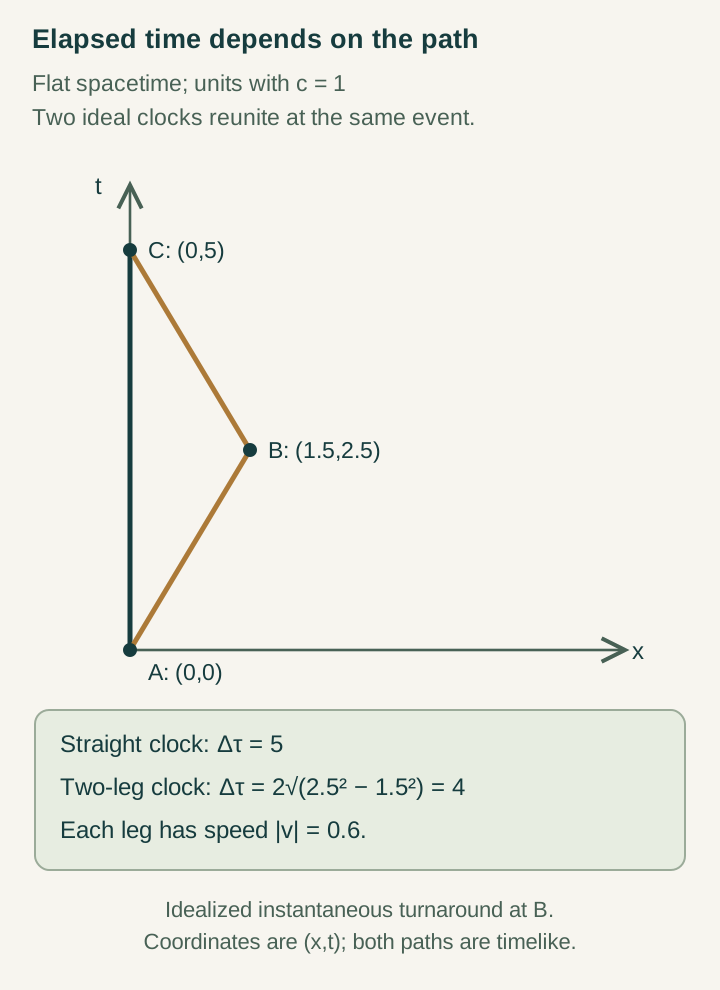
A straight worldline records five proper-time units while the displayed two-leg path records four in units c = 1. The exact piecewise-inertial comparison idealizes the turnaround and follows from integrating each path's interval.
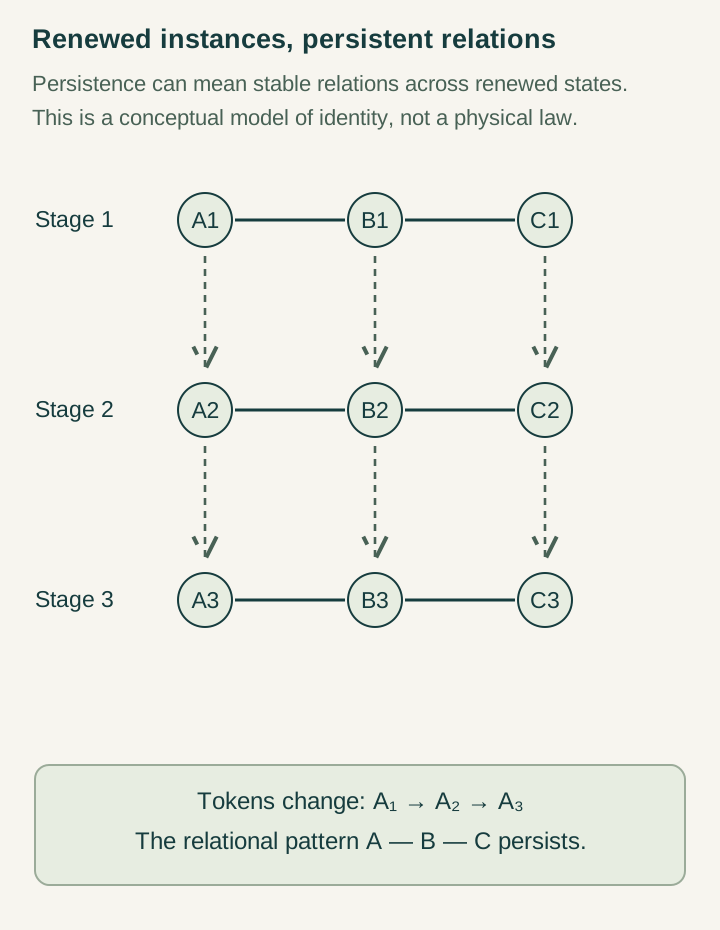
Successive newly labelled instances preserve the same chain of relations. This correspondence illustrates how structural persistence can coexist with renewal, while leaving the physical update and label interpretation explicit.
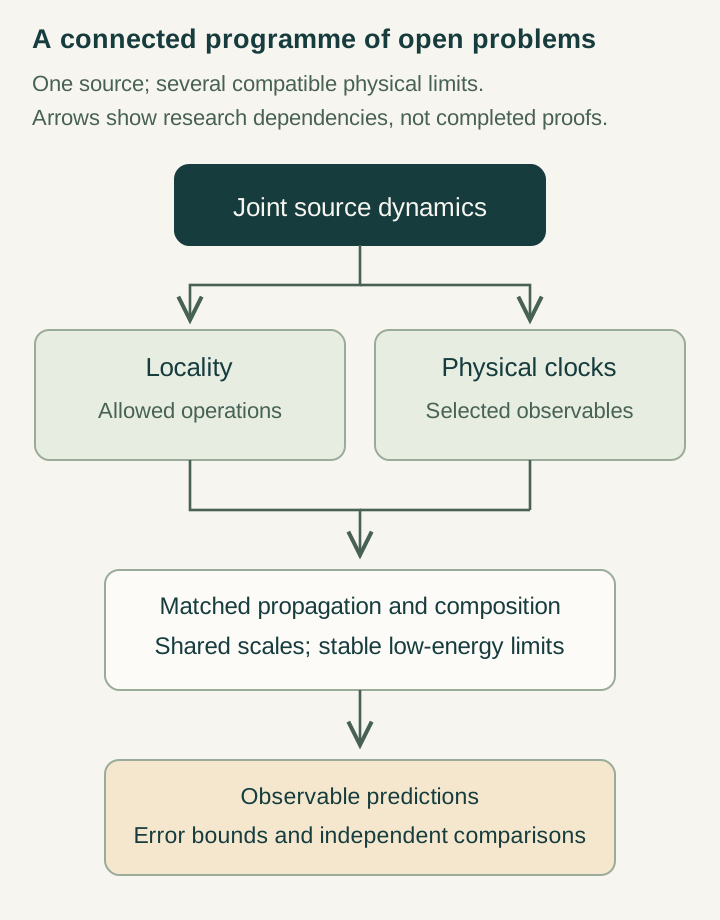
Joint source dynamics connects research on locality and clocks to propagation, composition, and observable predictions. Each arrow names an obligation requiring a mathematical or operational construction, with error bounds at the comparison stage.

Temporal order, measured duration, lived time, geometric time, and generative time pose different questions. The map provides vocabulary for connecting those questions while preserving their distinct meanings.
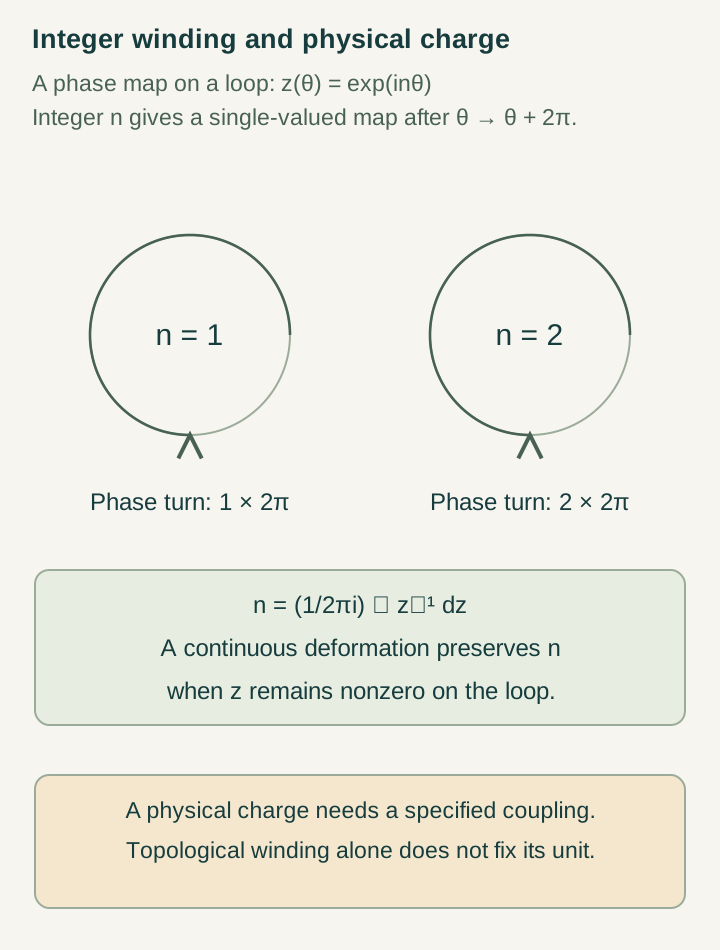
Phase maps of a domain loop have integer winding invariant under continuous nonzero deformations. Turning that topological integer into physical charge requires identification of the field and a normalized coupling.
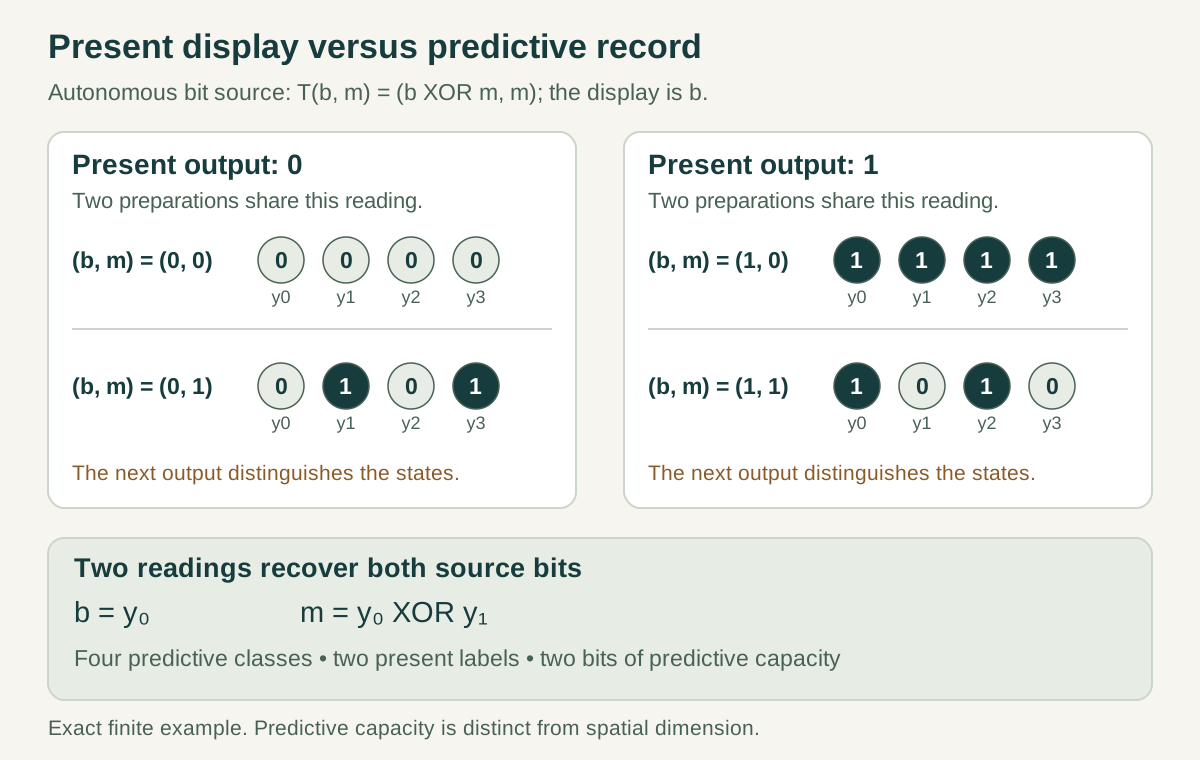
Completed-future equivalence gives a precise predictive state. In a finite linear model its minimal size is the rank of a delay-observation matrix; discarded information appears as an exact memory term.
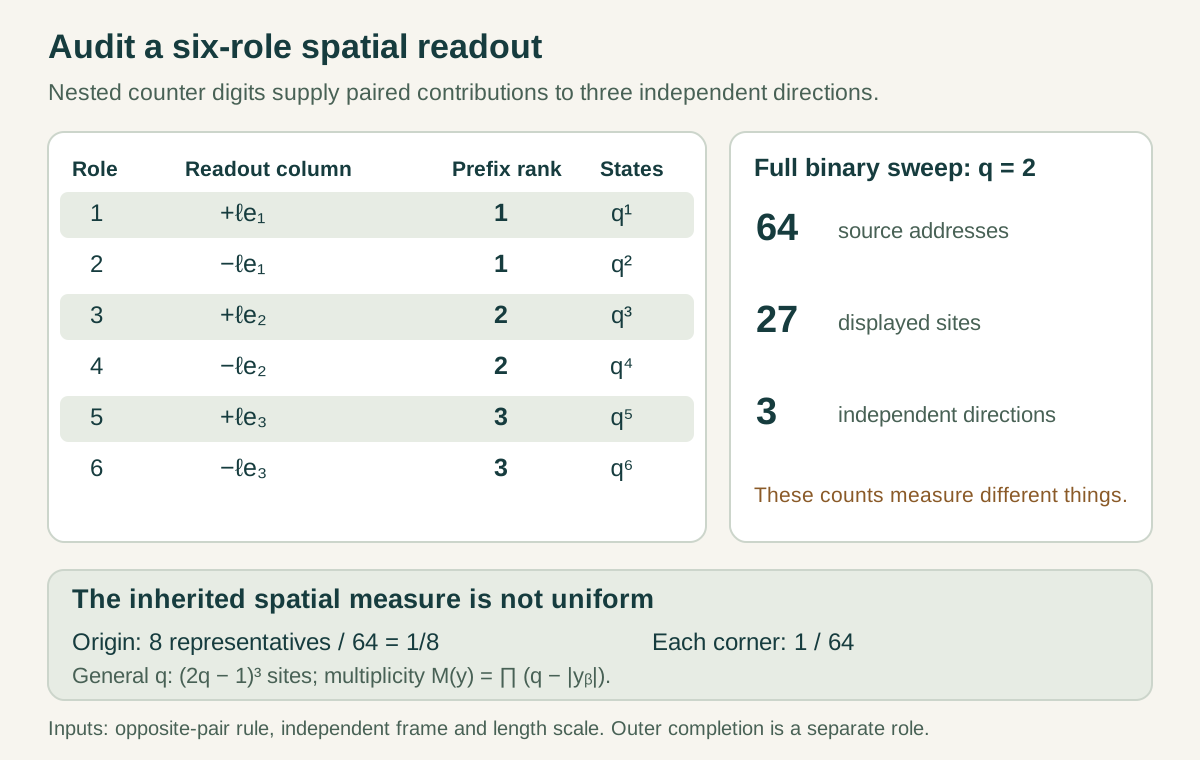
A paired six-channel source has an exact rank-three image. Its measure, stability and local dynamics can all be calculated, but each follows from a specified interface that a stronger source law must select together.
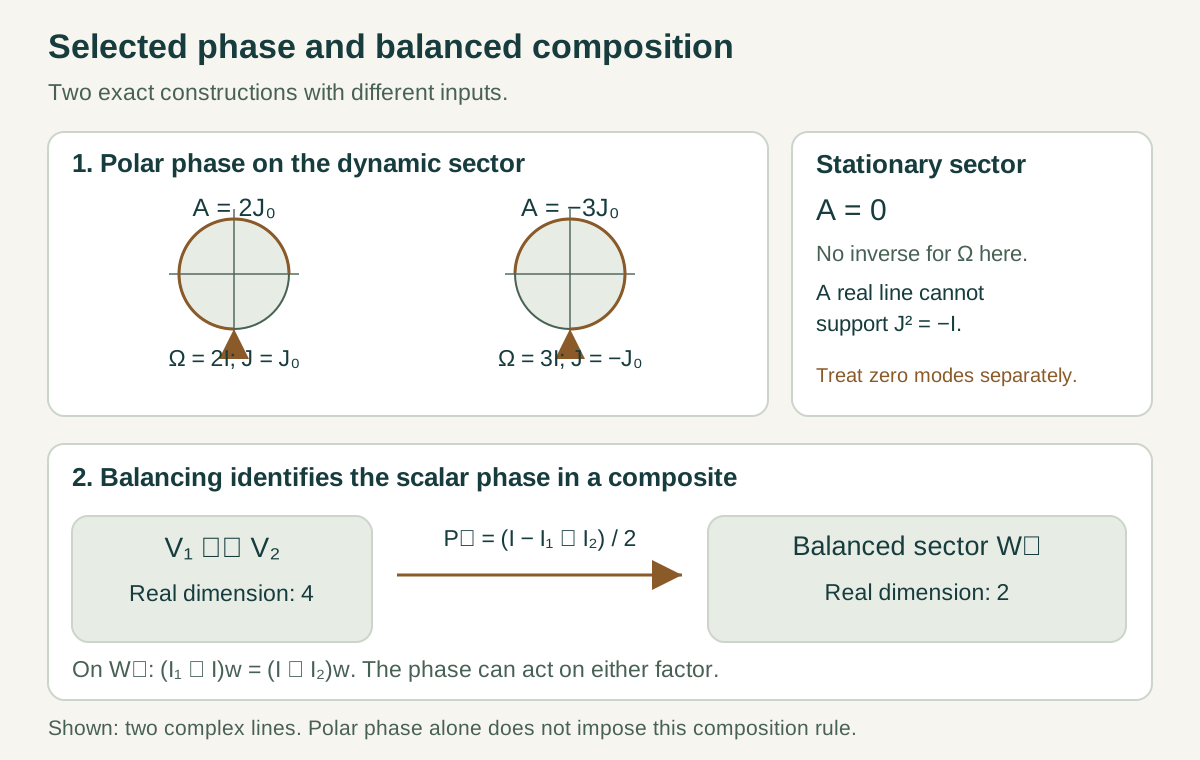
Polar decomposition selects a unique quarter-turn on the dynamic sector. Positive Schrödinger evolution uses i=−J; shared phase in a composite is then enforced by a distinct balancing construction.
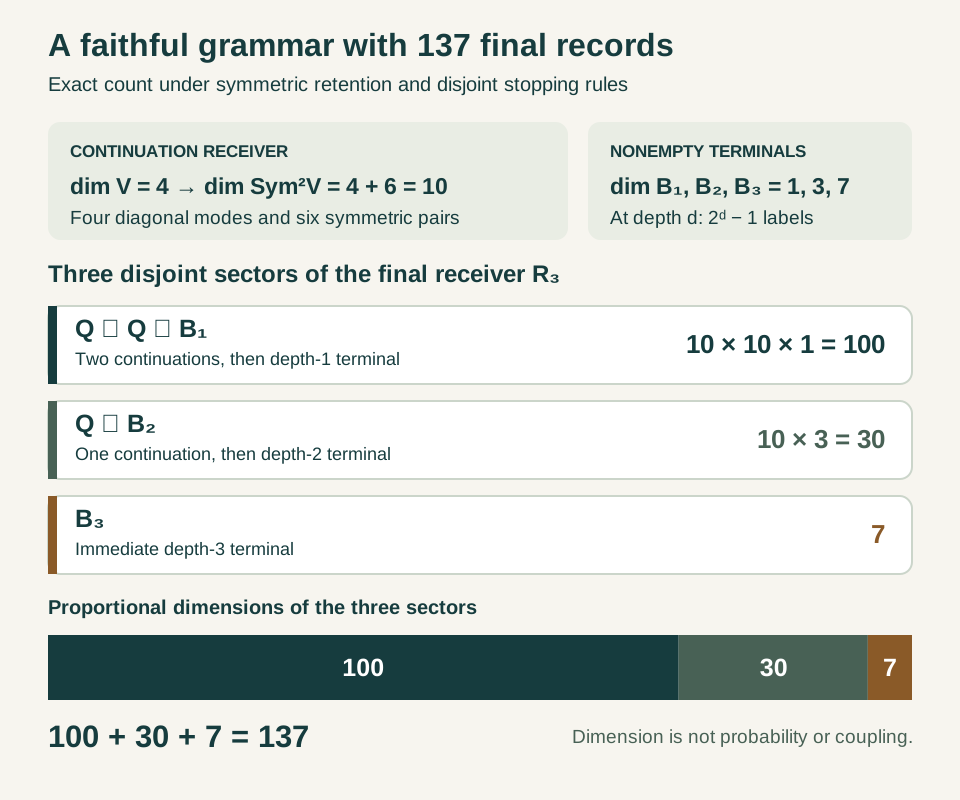
The ten-mode continuation receiver and disjoint terminal sectors produce 100, 30 and 7 records, with a proportional bar showing their exact sum.
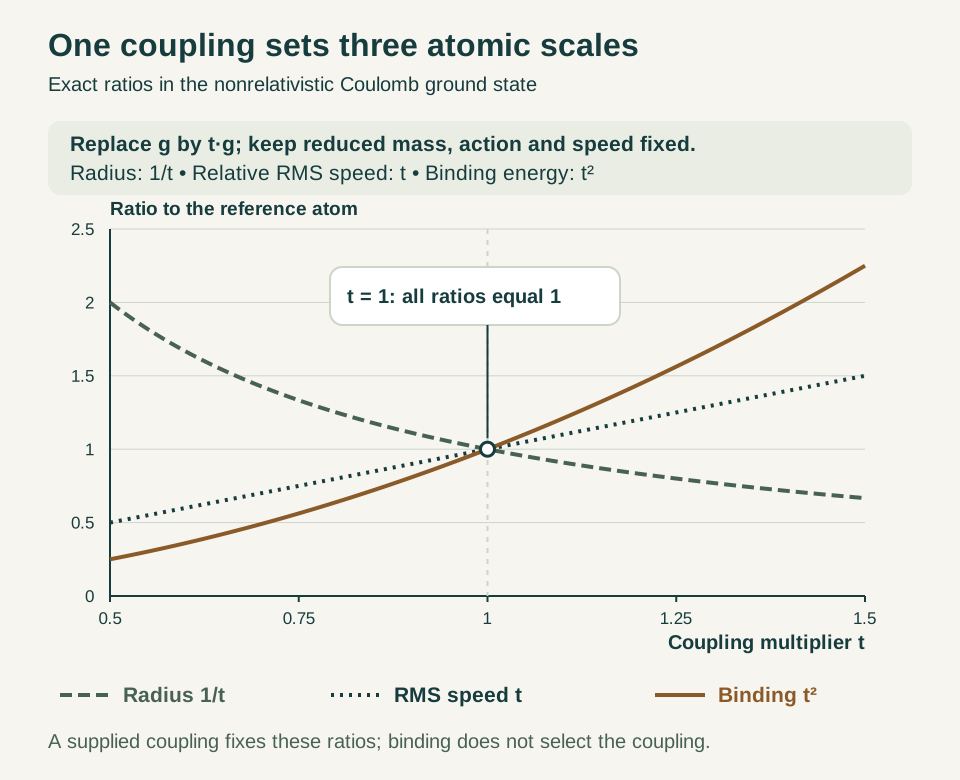
Exact Coulomb-model curves show how the radius, relative RMS speed and binding change together when the supplied coupling is multiplied by t.