

Find a concept
Single Monad
The proposed non-extended common source of generated distinctions in SMM. It is not a tiny object already located inside physical space. Read more →
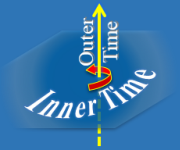
Inner time
The ordering and dependencies through which a configuration is generated. A physical duration is not supplied by the term alone. Read more →
Outer time
The ordering of completed, accessible records and their observable evolution. A calibrated clock supplies measured duration. Read more →
Completion
The specified process or rule by which a generated state becomes a retained record available to the admitted tests. Read more →
Record
A retained physical or mathematical distinction that can affect an observation or a later operation. A current display need not contain every predictive distinction. Read more →
History
An admissible ordered or compositionally organized collection of generating operations, including relevant retained information. Read more →
Future-test equivalence
Equivalence of histories under all admitted later tests and interventions, with equal outcome statistics. Read more →
Predictive closure / autonomy
The condition that an outer update can be computed from the retained record without choosing a hidden representative. Read more →
Hidden leakage
Influence of initially discarded information on a later visible record. In the linear model it is measured by PMΠ. Read more →
Renewal / re-creation
The book interpretation that the forms of the world are continually generated anew while lawful relations can persist. Read more →
Six inner roles
A nested paired organization used in the books’ account of dimensional generation. They are not six independently readable physical time axes. Read more →
Readout rank
The number of independent components resolved by a specified readout; distinct from a full manifold or spectral dimension. Read more →
Quaternion
An element of ℍ with one real and three imaginary components. Its multiplication is associative but generally noncommutative. Read more →
Complex structure J
A real-linear operator satisfying J² = −I; compatible Hilbert-space phase additionally involves adjoint and symmetry conditions. Read more →
Split-complex unit
An algebraic unit j satisfying j² = +1; its quadratic form is indefinite and supports hyperbolic transformations. Read more →
Relative phase
A phase difference between coherent alternatives that can affect a recombined measurement. Read more →
Decoherence
Suppression of interference in a reduced description through correlations with inaccessible degrees of freedom; not by itself a unique global outcome-selection law. Read more →
Recorder stage L
The apparatus-stage parameter in the finite recorder example. It is separate from the six inner roles and the three acquisition depths. Read more →
Proper time
The duration measured along a timelike path using the calibrated Lorentzian metric and a suitable physical clock. Read more →
Lorentz cone
The causal cone associated with a Lorentzian quadratic form. Obtaining it from propagation requires more than a generic finite graph speed. Read more →
Calibration
A specified operational connection between model variables and measured quantities such as duration, distance, or response. Read more →
Receiver rank
The dimension of the retained receiver constructed under a specified completion law. It is not automatically a measured coupling. Read more →
Memory kernel
A function or operator describing how a reduced evolution depends on its past. It can arise by eliminating hidden state. Read more →
Conditional result
A conclusion established under explicit hypotheses. Testing a physical theory also requires justifying the hypotheses and the observable identification. Read more →
No matching term. Try a broader word.
Search the whole section
Type at least two characters.