


Eight illustrated chapters
Completed records
An observation connects a physical interaction, a retained outcome, and a repeatable comparison. Follow that connection from an individual event to a statistical prediction.
02 / EXPLOREFuture tests
Two preparations can look identical to one detector and still disagree in a later experiment. Explore why a predictive completed state depends on the tests that remain possible.
03 / EXPLOREMeasurement instruments
Outcome probabilities do not fully describe a measurement. Compare a selected result with the state left when the outcome is ignored.
04 / EXPLORECoherence and environment
Watch interference visibility decrease while path populations stay fixed. The reduction is a specified physical channel, with a rate that must be calibrated.
05 / EXPLOREReliable memory
A completed outcome still needs a memory that survives later disturbance. Compare one stored bit with three redundant copies and a majority readout.
06 / EXPLOREFinite resolution
A detector stores bins, not an infinitely detailed curve. Integrate a known profile over finite channels and inspect which distinctions survive.
07 / EXPLOREJoint observations
Compare four pairs of measurement settings, evaluate a Bell–CHSH expression, and check the local marginals separately from the joint record.
08 / EXPLOREFrom records to evidence
Compare a stated probability with a synthetic outcome count, keep the sampling assumptions visible, and inspect a confidence interval that stays within the probability range.
From inner generation to observable physics
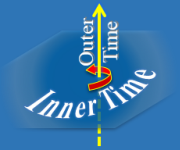
Duality distinguishes inner generation from outer observation. Emergence follows generated structure into completed records, while Phase explains the additional structure needed for interference. Observation now asks what an apparatus retains, how that information survives, and how a record becomes evidence.
The eight laboratories move from expected detection counts to future-test distinctions, measurement instruments, environmental dephasing, classical memory, finite resolution, joint correlations, and statistical comparison. Each is an explicit mathematical baseline with supplied inputs. The supporting texts connect these examples to published SMM/DTT research and the online books without treating the examples as independent derivations of quantum probabilities. [P01] [P02] [B24]
Follow the chapters in order for a complete journey, or begin with future tests to see why identical present populations need not define the same predictive state. The related Matter and Relativity sections address the material carriers and physical clocks that a detector must ultimately use.
Continue across the programme
Read the series as a connected argument: Duality introduces the temporal roles; Emergence constructs completed records; Phase examines complex structure. Observation tests records, Matter examines stable responses, and Relativity compares clocks and events.
Inspect the model and its sources
Every chapter includes an original downloadable diagram, an adjustable calculation, mathematical detail, and linked sources. The inputs are illustrative. Use the numerical readout alongside the drawing and download JSON, CSV, or SVG for further inspection.